Palolem Beach Guide: South Goa's Calmest Bay, Planned Properly
Palolem's curved bay is the beach most people mean when they say South Goa feels different — what it's actually like, how to get there, and how to plan around its smaller accommodation scene.
About the author
Rajesh Garela
8+ years curating verified stays across Goa
Quick Summary
- A curved bay roughly 1.5km long, calm enough for swimming most of the year outside monsoon
- Beach huts and small guesthouses dominate the accommodation scene more than large resorts
- Boat trips to Butterfly Beach and dolphin-spotting tours run daily from the beach
- Noticeably quieter than North Goa year-round, though it does get busier each December–January
- Roughly 1.5–2 hours from the North Goa beach belt, which makes it a stay of its own rather than a day trip
What Makes Palolem Different
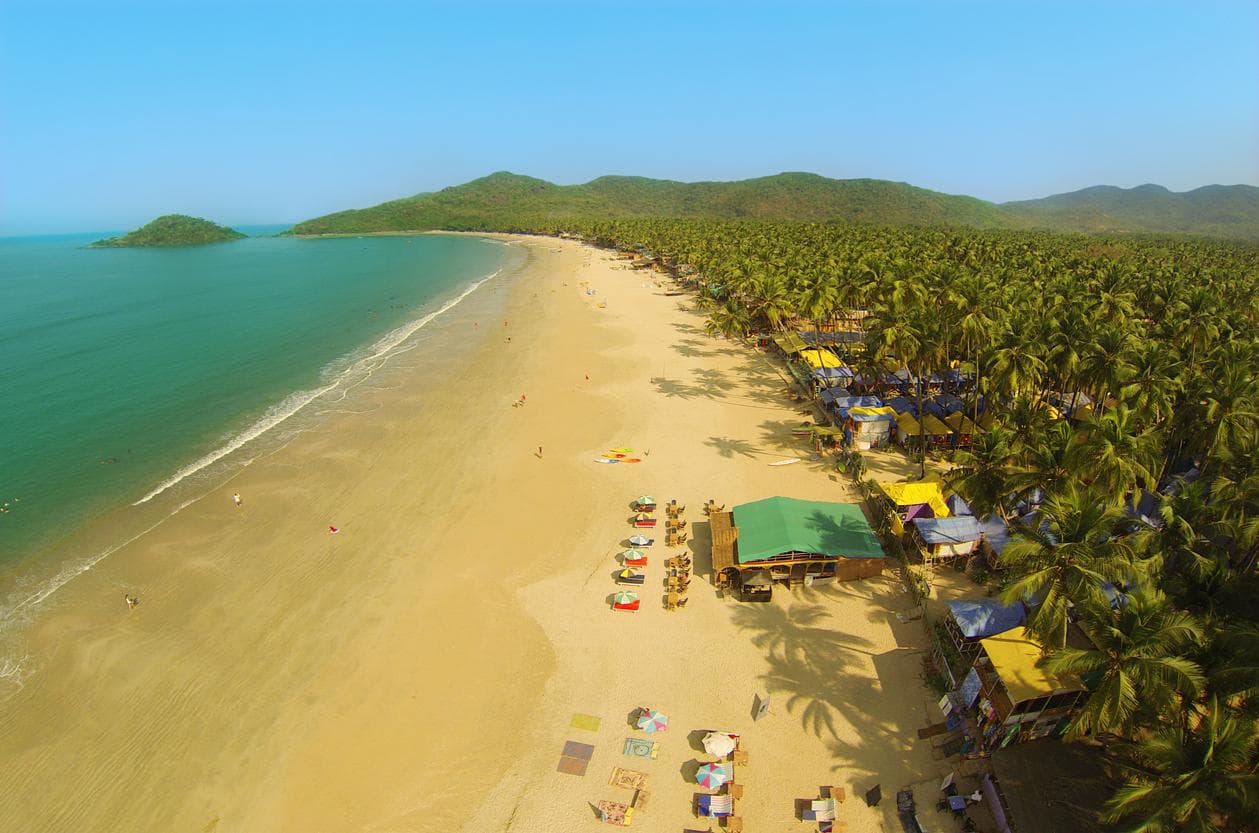
The shape of the bay is the first thing people notice — it curves gently enough that you can see both headlands from almost anywhere on the sand, which isn't something you get on the long straight stretches further north like Calangute or Colva. The water stays relatively calm for most of the year, which makes it one of the more reliably swimmable beaches in Goa outside monsoon season, and it's part of why Palolem has a reputation as an easier beach for families and less confident swimmers than the more current-prone stretches up north. The overall scale is smaller too — fewer shacks, a lower-rise skyline, and a pace that's built around long stays rather than day-trip volume.
Getting to Palolem
Palolem sits in Canacona taluka, close to the Goa–Karnataka border, which puts it at the far southern end of the state relative to both airports. It's roughly 60–65km from Dabolim Airport, which usually works out to around ninety minutes by taxi, and it's the airport most visitors flying into Palolem end up using. Manohar International Airport at Mopa, in the far north of the state, is considerably further away and noticeably less convenient for a South Goa trip — worth checking which airport your flight actually lands at before you book onward transport, since the difference genuinely matters here. It's also not a casual day trip from the North Goa beach belt; with something like ninety minutes to two hours of driving each way, most visitors treat it as its own separate leg of the holiday rather than a side visit squeezed in from Calangute or Baga.
Why Palolem Still Looks the Way It Does
Part of what keeps Palolem feeling low-rise and unhurried is regulation rather than accident. Coastal building rules restrict permanent construction directly on the sand, which is why most of the accommodation lining the beach itself is built from bamboo and timber rather than concrete — huts that are largely dismantled at the end of the season and rebuilt before the next one starts. It's a genuinely different rhythm from the fixed, year-round resort strips further north, and it's a big part of why the beach has held onto its character better than more heavily developed stretches of the Goan coast.
Nightlife, and the Workaround for the 10pm Rule
Goa's statewide noise curfew — no amplified music after roughly 10pm — applies here as it does everywhere else in the state, and it's part of why Palolem was never going to develop a Baga-style nightlife strip even if it wanted to. What the area built instead is genuinely distinctive: silent discos, where multiple DJs broadcast on separate wireless headphone channels so the party itself stays audible only to whoever's wearing a pair, letting the beach stay quiet after dark while the dancing carries on. These run on a rotating schedule through the main season, roughly November to April, at spots toward the southern end of the beach. It's a strange, genuinely fun thing to experience once, and it tells you a lot about how Palolem has adapted around the rules rather than fought them.
The Beach and the Water
Palolem's sand is soft and the gradient into the water is gentle, which is part of why it's held onto a reputation as one of South Goa's more relaxed swimming beaches. Conditions do shift with the season — the calm, glassy water most visitors picture is a dry-season condition, and currents pick up during the monsoon months when several operators pull boats and equipment off the water altogether. Dolphin sightings are reasonably common on the early-morning boat trips that run from the beach, though as with any wildlife sighting nothing is guaranteed on a given day.
Boat Trips and Day Activities
Local boat operators run daily trips to Butterfly Beach, a small cove reachable only by water, along with dolphin-spotting excursions that head out early morning when the sea is at its calmest and sightings are most likely. Kayaks are also available to rent directly on the beach if you'd rather explore the bay at your own pace rather than as part of a group trip. Prices for these trips vary a bit by operator and group size, so it's worth asking a couple of the boat stalls what a given trip covers — some include snorkelling stops, others are a straightforward there-and-back — before settling on one.
Where to Eat
Palolem's beach shacks lean toward a slower, long-stay-traveller crowd than the high-turnover shacks further north — think unhurried breakfasts, decent coffee, and seafood that's typically caught the same morning. It's a genuinely different energy from Calangute or Baga's shack scene, less about volume and more about a kitchen that expects you to sit for a while. The southern end of the beach tends to have the better concentration of options if you're looking to walk and compare rather than settle at the first place you reach.
Cotigao and What's Nearby
Palolem's location at the southern edge of Goa puts a few things within easy reach that North Goa bases don't have as conveniently. Cotigao Wildlife Sanctuary, one of Goa's main forest reserves, is a short drive inland and a reasonable half-day option if you want a break from the beach. Agonda, a quieter beach a short ride north, is worth knowing about even if you're not staying there — it's a common comparison point for travellers deciding between the two, and the short distance between them means you can visit one while based at the other without much trouble.
Patnem and the Rest of Canacona
Palolem isn't the only beach on this stretch of coast — Patnem, a short ride south, is smaller and even quieter, with its own low-key shack scene and a similar bamboo-hut accommodation style. Colomb Bay sits right between the two, a tiny cove that's easy to miss unless you're specifically looking for it. None of these are a reason to skip Palolem itself, but knowing they're there is useful if you're based here for several nights and want a change of scenery without a long drive — most of Canacona's beaches are close enough to string together into an easy half-day loop by scooter.
Choosing Between a Beach Hut and a Villa Stay
The classic Palolem experience is a bamboo beach hut a short walk from the water, and for a shorter stay or a couple travelling light, that's often genuinely the right call — it's close to the sand, low-key, and part of what makes the area feel different from North Goa's resort strips. For a longer stay, a family trip, or a group that wants a private pool and more room to spread out, it's worth looking slightly inland or further along the South Goa coast, since Palolem's own hut-and-guesthouse inventory doesn't really stretch to villa-scale properties. That's less a compromise than it sounds — South Goa's villa and resort options around Colva, Betalbatim and Varca sit within an easy drive and keep you in the same unhurried, less-crowded part of the state while giving a group the space a beach hut simply can't.
Palolem Compared to Agonda
These two get compared constantly, and the honest answer is that Agonda is generally the quieter of the pair, with fewer boat operators, a more low-key shack scene, and less in the way of built-up infrastructure. Palolem has more going on — a wider spread of eating options, the boat trips, a slightly bigger accommodation base — while still being considerably calmer than anything in North Goa. If you want South Goa's slow pace but with a bit more choice around you, Palolem tends to be the better fit; if you want that pace taken even further, Agonda usually wins that comparison.
Who Palolem Suits Best
Couples and small groups looking for a genuinely slower pace than North Goa do well here, as do families with younger kids given the calmer, more gradually sloping water. It's a weaker fit if nightlife or a dense restaurant scene is what you're after — that's not really what Palolem is built around, and travellers expecting a Calangute-style evening out tend to be the ones disappointed, silent discos aside. It also suits people planning a longer stay in one place rather than a fast-moving multi-stop itinerary, since the distance from North Goa makes frequent back-and-forth impractical. Long-stay travellers and remote workers are a genuine and visible presence here too — the slower pace, decent cafés and relatively lower cost of a longer stint make it a reasonable option for anyone treating Goa as a multi-week base rather than a one-week holiday.
Accommodation in Palolem and the Wider South Goa Coast
Palolem's own accommodation scene leans toward beach huts and small guesthouses more than the resort-and-villa mix you'd find in Calangute or Baga, which is part of its character but does mean fewer large-capacity options directly on this stretch of sand. If you're set on Palolem specifically, it's worth booking earlier than you might for North Goa, since the inventory here is genuinely smaller relative to demand, especially across December and January. For groups or families wanting more space — a private pool, multiple bedrooms under one roof — it's also worth looking a little further along the South Goa coast, toward areas like Varca, Cavelossim or Colva, which sit within a reasonable drive and offer a broader range of villas and resorts while still keeping you close to South Goa's calmer, less built-up character rather than pulling you back into the North Goa crowd.
Best Time to Visit Palolem
November through February brings the calmest seas and most reliable weather, the same window that works best across most of Goa, and it's when Palolem's boat trips and water activities run most consistently. It stays noticeably quieter than North Goa even during this peak stretch, though December and January still bring a real jump in both crowds and rates compared to the shoulder months. The monsoon season, roughly June through September, sees many boat operators pause entirely and the beach itself take on a much emptier, wetter character — appealing if you specifically want solitude and don't mind grey skies, but not the version of Palolem most visitors are picturing.
Getting to Palolem by Train
Canacona railway station, on the Konkan Railway line, sits close enough to Palolem — roughly a ten-minute auto ride — that it's a genuinely useful option for anyone travelling within India rather than flying directly into Goa. Only a limited number of trains actually halt at Canacona itself, so it's worth checking a specific train's stop list rather than assuming it calls there; Madgaon Junction, Goa's main railway station, has far more services and sits about thirty to forty minutes from Palolem by road, and remains the more reliable choice if your preferred train doesn't stop at Canacona directly. For travellers coming up from Kerala or Karnataka, or down from Mumbai on an overnight service, the train can work out considerably more relaxed than flying into Dabolim and driving the rest of the way south.
Money, Connectivity and Medical Access
Cash still goes further in Palolem than it does in North Goa's bigger beach towns — smaller shacks, boat operators and guesthouses are less consistently set up for card or UPI payments, so it's worth carrying more cash here than you might in Calangute or Baga. ATMs exist in the main village area but are fewer and further between than in the busier North Goa strip, so it's sensible to stock up before you arrive rather than assume you can withdraw on the spot. For anything beyond minor issues, Margao, roughly forty-five minutes to an hour away, has South Goa's main hospitals; Palolem itself has basic clinics for everyday needs but isn't the place to rely on for anything serious.
Yoga, Wellness and the Long-Stay Culture
Palolem and neighbouring Patnem have a genuine, long-running presence of yoga and wellness-focused stays and drop-in classes, tied to the same long-stay traveller culture that shapes the area's slower pace generally. It's common enough that visitors planning a longer stint often build a loose routine around a regular class rather than treating it as a one-off holiday activity. This is worth knowing even for a short visit, since it's part of why Palolem's daily rhythm — early starts, quiet afternoons, unhurried evenings — feels different from the more shack-and-sunbed default further north.
A Sample Day in Palolem
A rhythm that suits Palolem well: an early swim or walk along the bay before the sun gets properly hot, a slow breakfast at a shack rather than rushing to the next thing, and a boat trip out to Butterfly Beach or a dolphin-spotting run mid-morning while the water's calmest. Afternoons are for doing very little — reading in the shade, a kayak out on the bay, or the short drive to Cotigao if you want a change of scenery — before heading back for sunset and a slow dinner. It's a day built around not rushing, which is really the whole point of choosing Palolem over a North Goa base in the first place.
Safety and Practical Considerations
Palolem's calmer water makes it one of the more forgiving South Goa beaches for swimming, but conditions still shift with the season and it's worth checking with your accommodation or a lifeguard post about current conditions rather than assuming the bay is uniformly safe year-round. Boat trip operators vary in how seriously they take basic safety gear, so it's reasonable to ask about life jackets before booking a Butterfly Beach or dolphin trip, particularly if you're travelling with kids. As with anywhere in Goa, keep an eye on valuables left on the sand, and carry a bit more cash than you might in North Goa, since card acceptance is patchier at Palolem's smaller, family-run shacks and boat stalls.
Budget and Value Compared to North Goa
Palolem tends to feel a little more relaxed on the wallet than North Goa's busiest beach towns, partly because the accommodation mix leans toward simpler huts and guesthouses rather than a dense cluster of premium resorts and villas competing for the same beachfront. That said, prices climb through December and January just as they do everywhere else in Goa, and a well-located beach hut in peak season can cost more than a similar-standard room further from the sand in the shoulder months. If value is the priority over beachfront proximity, looking at stays a short scooter ride back from the water — whether in Palolem itself or the wider South Goa coast — generally stretches the budget further without giving up much in terms of overall experience.
Practical Tips for a Palolem Trip
- Book boat trips directly on the beach rather than through third parties where possible — prices are usually clearer and more consistent
- If Palolem is your main base, weigh Mopa against Dabolim carefully — the drive difference is significant given how far south Palolem sits
- Bring cash for smaller shacks and boat operators, since card acceptance is less consistent here than in the busier North Goa beach towns
- If you want more accommodation choice than Palolem's own limited inventory offers, look at nearby South Goa areas like Colva or Varca rather than defaulting back to North Goa
- Plan for at least two to three nights if you're making the trip down — the distance from North Goa makes a shorter stay feel disproportionate to the travel time
Frequently Asked Questions
Is Palolem good for families?
Yes — the calm water and gently sloping sand make it one of the easier South Goa beaches for younger kids, and the overall pace is generally slower and less overwhelming than the busier North Goa beaches.
Can I do a day trip to Palolem from North Goa?
Technically, but with roughly an hour and a half to two hours of driving each way, it makes for a long day. It works much better as a dedicated two- to three-night stay of its own than a side trip.
What's the best time to visit Palolem?
November through February for the calmest seas and most reliable weather, consistent with the rest of Goa. It stays noticeably quieter than North Goa even during peak season, though rates and crowds do rise through December and January.
Is Palolem better than Agonda?
It depends what you want. Palolem has more infrastructure — boat trips, a wider food scene, more accommodation choice — while Agonda is quieter and more low-key. Neither is objectively better; they suit slightly different versions of a slow South Goa trip.
What if there aren't many stay options directly in Palolem?
Palolem's own inventory is smaller than North Goa's beach towns, so it's worth booking earlier and, if needed, considering nearby South Goa areas like Colva or Varca for more choice in villas and resorts while staying close to the same calmer coastline.
Is there nightlife in Palolem?
Not in the North Goa sense — a statewide noise curfew rules out loud late-night bars and clubs here. What Palolem has instead is its silent disco scene, running through the main season, which is a genuinely fun once-you're-there experience even if it's not what most people picture when they think "Goa nightlife."
Which airport should I fly into for Palolem?
Dabolim, generally — it's around 60–65km away and the more established route for South Goa. Mopa in the far north is a considerably longer transfer and makes more sense if Palolem is one stop on a wider North-to-South Goa trip rather than your only base.
Can I reach Palolem by train?
Yes, via Canacona railway station on the Konkan Railway line, roughly ten minutes from the beach by auto — though only some trains halt there, so it's worth checking your specific service. Madgaon Junction, thirty to forty minutes away, has far more train options if your service doesn't stop at Canacona.
Is Palolem good for a longer, slower stay rather than a quick visit?
Very much so — the area's yoga and wellness culture, its long-stay guesthouse options and its generally unhurried pace all suit a stay of a week or more better than a quick two-night stop, which is a big part of what sets it apart from North Goa's shorter-stay beach towns.
Stays Featured in This Guide
 Villa
VillaSunset Cove Cottages
South Goa, Palolem
₹1,800/night | ₹3,600/night (Nov–Jan ★)
 Resort
Casa Fontana Resort
South Goa, Colva
₹6,200/night | ₹12,400/night (Nov–Jan ★)
 Resort
Marvella Resort South Goa
South Goa, Varca
₹7,200/night | ₹14,400/night (Nov–Jan ★)
 Resort
Aurelia Varca Resort
South Goa, Varca
₹10,500/night | ₹21,000/night (Nov–Jan ★)
Related Guides
Related Articles
 Beach Guides
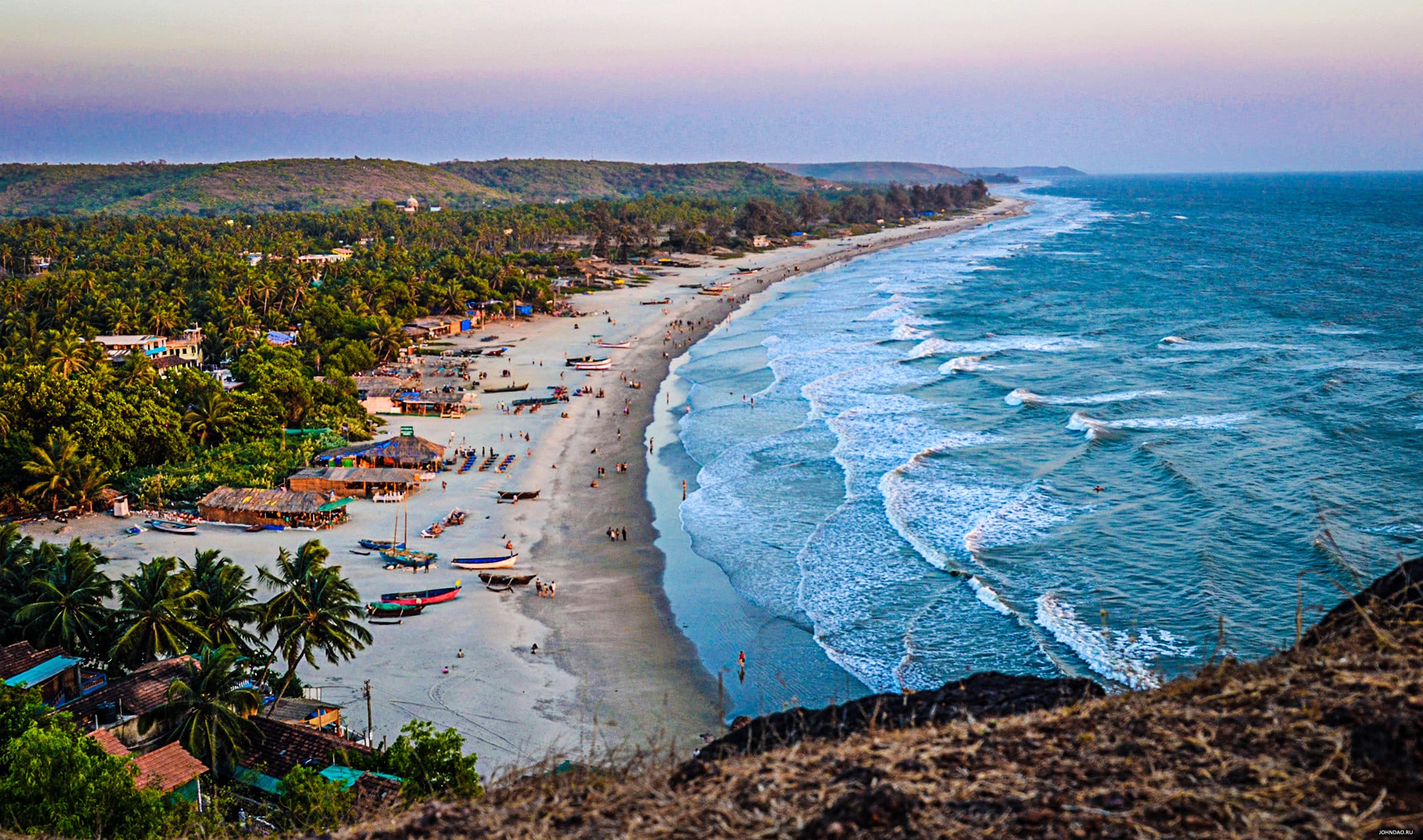
Arambol Beach Guide: Goa's Slower, Bohemian North
Arambol sits at the far edge of Goa's beach belt and has kept a slower, more independent character — a cliff-path lake, an evening drum circle, and a genuinely different pace than the beaches closer to the airport.
 Beach Guides
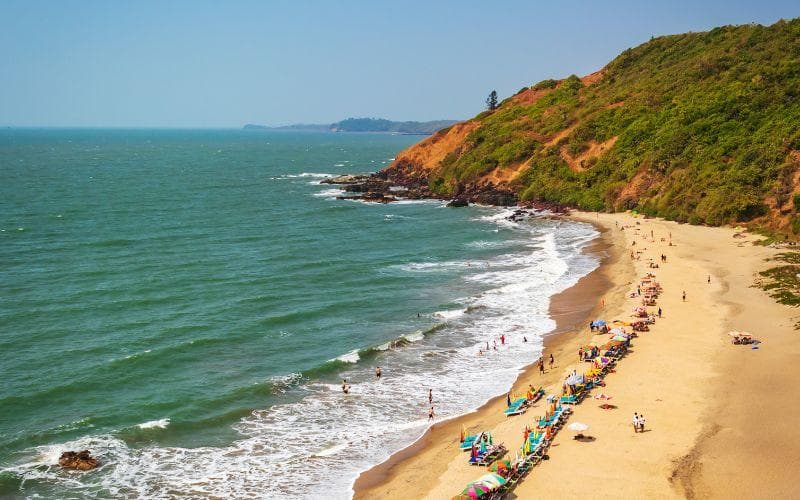
Vagator Beach Guide: Cliffs, Chapora Fort & Where to Stay
Vagator trades flat sand for red laterite cliffs, a working sunset ritual at Chapora Fort, and a small, boutique-leaning stay scene next door to Anjuna.
Ready to Book Your Goa Escape?
Tell us your dates and we'll find the perfect villa, resort or cottage for you — usually within the hour.