Morjim Beach Guide: Turtle Nesting, Quiet Mornings & Where to Stay
Morjim trades nightlife for turtle nesting and unhurried mornings — a practical guide to what the beach is actually like, who it suits, and where to stay nearby.
About the author
Rajesh Garela
8+ years curating verified stays across Goa
Quick Summary
- Known for olive ridley turtle nesting, roughly November to March
- A large Russian-speaking community, reflected in local signage and restaurants along the beach road
- A gentle, family-friendly shore with a much slower pace than Calangute or Baga
- Close to Ashwem, another quiet beach with a similarly unhurried character
- Better suited to a relaxed beach break than a nightlife-driven trip
Getting There and Getting Around
Morjim sits further north along the coast than Goa's busier beach towns, which puts it at a slightly longer distance from Dabolim Airport than Calangute or Candolim. That extra distance is part of what keeps the pace here slower — it's less of a natural stopover for travellers just passing through, and more of a deliberate base for people who've decided in advance that they want a quieter stretch of coast. Once you're settled in, a scooter is genuinely useful, both for exploring Morjim's own length and for the short trips to Ashwem and the wider Arambol-Pernem belt.
What Makes Morjim Different from a Typical North Goa Beach Town
Most descriptions of North Goa's beach towns centre on some version of shacks, shopping and nightlife, arranged in different proportions. Morjim doesn't really fit that template. It reads more like a residential coastal neighbourhood that happens to have a beautiful, wide beach, with a settled population of long-stay residents rather than a purely tourist-driven economy. That distinction matters practically — you're less likely to find the beach road transforming into a different, more commercial version of itself every peak season, and more likely to find a consistent, if quiet, character year to year.
The Beach and Its Pace
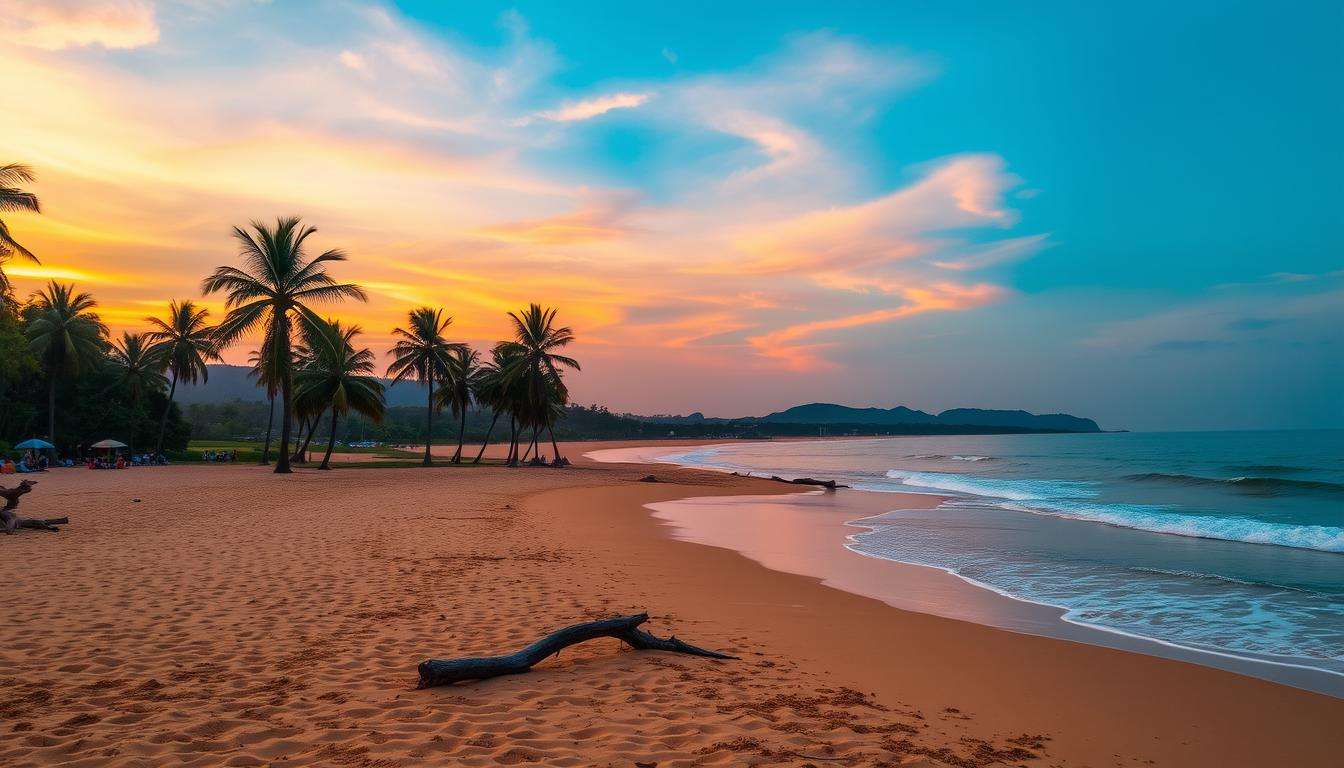
Morjim's shore is gentle and family-easy, with far less of the shack density you'd find further south in Calangute or Baga. The sand is wide and the water tends to be calmer than the more exposed stretches of the North Goa coastline, which makes it a comfortable spot for slower mornings rather than an activity-packed beach day. It suits travellers looking for long walks and unhurried time by the water over a schedule full of things to do — the appeal here is genuinely in the pace rather than in any single attraction.
Turtle Nesting Season
Morjim is one of the few beaches in Goa where olive ridley sea turtles come ashore to nest, typically between November and March. A protected section of the beach is roped off during this period to give the nesting turtles and their hatchlings the best chance of survival, and it's worth checking locally for approved, respectful viewing arrangements if your visit lines up with the season rather than approaching the roped-off sections directly. Turtle nesting has become something of a defining feature of Morjim's identity, and it's a large part of why the beach has stayed more protected and lower-key than some of its neighbours further south.
For travellers whose trip is specifically built around the turtles, it's worth setting expectations correctly from the start — nesting activity depends on the turtles themselves, not a fixed calendar of guaranteed sightings, and the protected status of the nesting area means close-up viewing isn't something you can simply walk up and arrange. What the season does reliably deliver is a beach that stays quieter and more carefully managed through those months than it might otherwise be, which is its own kind of appeal even if you don't see a turtle nest during your specific stay.
Morjim's Russian-Speaking Community
The Russian-speaking presence in Morjim is long-standing and visible — restaurant menus, signage and the general mix of long-stay residents all reflect it. For visitors, the practical effect is a beach road with a genuinely international restaurant scene alongside the usual Goan seafood shacks, and a slightly different everyday rhythm than towns built primarily around domestic Indian tourism. It's not something that should shape your decision to visit one way or another, but it does contribute to Morjim feeling like its own distinct pocket of the coast rather than simply a quieter version of Calangute.
Where to Eat
The beach road's restaurant mix leans noticeably international, a legacy of the area's long-stay resident community — alongside the usual Goan seafood shacks, you'll find a fair number of cafes and restaurants catering to longer-term visitors. It's a reasonable base if your group wants variety beyond typical beach-shack fare, though it's worth noting that Morjim's food scene is generally lower-key and less see-and-be-seen than some of the more Instagram-driven spots further south.
If your stay includes an in-house restaurant, as both of Morjim's main resort properties do, that's worth factoring into your plans too — it means you're not always dependent on a scooter ride for dinner, which matters more here than in a denser beach town where restaurants are within a two-minute walk in every direction.
Morning Versus Evening at Morjim
Mornings at Morjim are genuinely quiet, particularly along the stretches away from the main beach access points, and this is generally the best window for a walk if turtle nesting season happens to coincide with your visit. The middle of the day brings out more activity around the shacks, though nothing close to the density you'd see at Calangute or Baga. Evenings are unhurried rather than lively — Morjim isn't a sunset-crowd destination in the way some other North Goa beaches are, and the beach road settles into a calm, low-key dinner scene rather than building toward a night out.
Morjim Versus Ashwem and Arambol
Ashwem, just north of Morjim, shares a similarly low-key character but with a slightly more upscale set of beach clubs and a reputation that's grown considerably among travellers looking for a quieter, more curated beach experience. Arambol, further north still, has developed its own distinct identity built around a bohemian, long-stay traveller scene, live music and a more backpacker-oriented crowd than Morjim's mix of families and long-term residents. All three beaches sit along the same quieter stretch of North Goa, and the differences between them are more about specific character than dramatic contrasts — Morjim is the more residential, family-friendly option of the three, Ashwem leans more upscale, and Arambol leans more bohemian.
If you're trying to choose between the three rather than treating them as a single quieter-North-Goa cluster, think about what you actually want out of the slower pace. Morjim's draw is its combination of family-friendly practicality and the turtle nesting season; Ashwem suits travellers who want the same calm but with a slightly more polished beach-club experience; Arambol suits those who want the quiet daytime pace paired with a more social, communal evening scene. It's entirely possible to base yourself in one and treat the other two as easy day trips, since they sit close enough together along the same stretch of coast.
A Sample Day Based in Morjim
A typical day here starts slowly, and that's really the point of choosing Morjim as a base. An early walk along the beach, particularly rewarding if you're visiting during turtle nesting season, tends to be the best part of the day before the heat sets in. Late morning is a reasonable window for a short scooter ride up to Ashwem if you want a change of scenery, or simply staying local and settling into a pool at your stay. Afternoons are unhurried by design — there isn't the same pressure to pack in activities that you'd feel at a busier beach town — and evenings usually mean a relaxed dinner along the beach road rather than any kind of organised night out.
Morjim for Solo Travellers
Morjim can work for solo travellers who specifically want a slower, more reflective trip rather than a social, backpacker-heavy scene. It's a comfortable place to spend a day alone, and the international restaurant mix means solo dining doesn't feel out of place. That said, travellers looking to meet people quickly and fall into a ready-made social scene will likely find Arambol, with its more backpacker-oriented crowd and live-music culture, a better fit for that specific goal.
Money, Connectivity and Everyday Practicalities
Morjim is developed enough to cover everyday practicalities without much difficulty, though it's noticeably less commercial than Calangute or Baga — don't expect the same density of ATMs, pharmacies or convenience stores directly on the beach road. Most stays in the area include WiFi as standard, and the general pace of the town means it's a genuinely workable option if part of your trip involves working remotely, provided you're not relying on a constant stream of nearby amenities.
Morjim for Groups
Given that Morjim's current stay inventory leans toward resort-style rooms rather than large private villas, it's a less natural fit for bigger groups wanting to book one exclusive-use property together. Smaller groups of couples or families travelling in parallel, each booking their own room at the same resort, tend to work better here than a single group trying to fit into one villa the way you might in Candolim or Calangute.
Common Mistakes Visitors Make
- Expecting a lively beach-shack scene similar to Calangute or Baga, when Morjim's actual character is considerably quieter and more spread out
- Visiting specifically for turtle nesting without checking the season dates in advance, or expecting guaranteed sightings on a fixed schedule
- Underestimating the transfer time from Dabolim Airport and treating Morjim as a quick day trip rather than a proper base
- Assuming villa-style private-pool stays are widely available, when the area's inventory currently leans toward beachfront resorts
Who Morjim Suits Best
Families wanting a calmer beach, couples avoiding the party circuit, and anyone visiting during turtle nesting season all tend to find Morjim a strong fit. It also suits travellers who've already done a livelier North Goa base on a previous trip and are specifically looking for something quieter this time around, or anyone planning a longer, slower stay rather than a fast-paced multi-stop itinerary. Repeat visitors to Goa in particular tend to appreciate Morjim precisely because it doesn't try to be Calangute or Baga — it's a genuinely different register of the same coastline.
Who Might Prefer a Different Base
It's less suited to travellers whose priority is nightlife or a dense cluster of restaurants and shops within easy walking distance — Baga or Candolim serve that better. If your trip is built around water sports, shopping and an active beach-day schedule, you're likely to find Morjim's slower pace more of a mismatch than a highlight. And because the area's stay inventory leans toward beachfront resorts rather than the villa-heavy mix you'd find in Candolim or Calangute, larger groups specifically wanting a private multi-bedroom villa may find better options further south.
Where to Stay in Morjim
Morjim's accommodation options are smaller in number than the busier North Goa towns, but the two main properties cover genuinely different versions of a Morjim stay. Tidewood Cottages sits a short walk from the beach with premium wooden and modern-style cottages set around a central swimming pool, built for a slower kind of holiday — mornings by the pool, evenings walking the shoreline toward Morjim's turtle-nesting stretch or further on to Arambol's cliffside cafes. Costa Dourada Resort sits directly on Morjim's open shoreline, with sea-facing rooms and a beachfront pool that makes the most of the wide, uncrowded sand right outside.
Both properties suit couples and families looking for a genuine beach stay rather than a party base, and both include an in-house restaurant, which is a practical convenience given Morjim's more spread-out, lower-key dining scene compared to somewhere like Calangute. If a private villa with a kitchen and dedicated group space is specifically what you're after, it's worth checking Candolim or Calangute instead, since Morjim's current inventory is concentrated in resort-style stays.
Tidewood Cottages leans toward a more secluded, garden-and-pool experience with the beach a short walk rather than immediately outside your door, which suits travellers who want a bit of separation between their stay and the shoreline. Costa Dourada Resort, by contrast, puts you directly on the sand with sea-facing rooms, which matters if waking up to an unobstructed beach view is a genuine priority for your trip rather than a nice-to-have.
Safety and Practical Considerations
Morjim doesn't carry any unusual safety concerns beyond the general precautions that apply across North Goa's beaches — take care swimming beyond marked or obviously calm areas, since currents can vary along different parts of the coastline, and keep valuables out of sight if you're leaving belongings on the sand. Because the area is quieter and less densely lit than Calangute or Baga after dark, it's worth being a little more deliberate about scooter use at night, particularly on the stretches of road between Morjim and Ashwem.
Respecting the Turtle Nesting Area
If your trip coincides with nesting season, the most useful thing to know is simple: the roped-off sections exist specifically to protect nesting turtles and their eggs, and they should be treated as off-limits rather than an obstacle to walk around or peer over. Local authorities and conservation volunteers typically manage the protected areas directly, and any legitimate viewing opportunity should come through them rather than through an informal arrangement on the beach. Beyond the roped-off zones, there's no restriction on enjoying the rest of the beach as normal.
Practical Planning Tips
If turtle nesting is part of the draw, plan your visit within the November-to-March window and build in some flexibility, since nesting activity isn't something that can be guaranteed on any specific date. Because Morjim sits further from Dabolim Airport and the busier beach towns than Candolim or Calangute, it's worth factoring in a longer transfer time when you're planning your itinerary, particularly if Morjim is one stop among several. A scooter is genuinely useful here, both for the short hop to Ashwem and for reaching Arambol without depending on taxis for every trip.
Seasonal Considerations Beyond Turtle Nesting
Like the rest of North Goa, Morjim's peak season runs through November to January, when the weather is at its most settled and the beach is at its busiest — though “busiest” here is relative, since Morjim never reaches the density of Calangute or Baga even at peak times. The shoulder months either side of peak season bring fewer visitors still and generally better value on stays, with the trade-off of less predictable weather.
Combining Morjim with the Rest of North Goa
Morjim works well as one stop within a longer North Goa trip rather than necessarily the only base for your whole stay. A common pattern is splitting time between a livelier town like Calangute or Candolim for a few nights and Morjim for the remainder, giving your trip both the energy of the busier beaches and the genuine downtime that Morjim offers. If you do split your stay this way, it's worth booking the transfer time into your plans realistically rather than treating it as a quick hop, since Morjim's distance from the busier towns is real enough to matter for a day with luggage in tow.
What to Check Before Booking a Morjim Stay
- Actual distance from the property to the beach, particularly if a sea view or beachfront access matters to your trip
- Whether the property has a private or shared pool, since Morjim's resort-heavy inventory typically means shared, hotel-style pools rather than exclusive-use ones
- Realistic transfer time from Dabolim Airport, since Morjim sits further north than Candolim or Calangute
- Whether your group actually wants a villa with a kitchen and private space, since Morjim's current options lean toward resort-style stays rather than villas
- Turtle nesting season dates if that's a specific reason for your visit, and any local guidance on respectful viewing
Planning a Longer Stay in Morjim
Because Morjim's whole appeal rests on slowing down rather than covering ground, it tends to reward longer stays more than a quick one- or two-night stop. Travellers who spend four or five nights here generally get more out of the area than those passing through briefly, simply because the pace only really pays off once you stop feeling like you need to be doing something. If you're combining Morjim with a busier North Goa base elsewhere on the same trip, it's worth putting Morjim toward the end of the itinerary, as a deliberate wind-down rather than a warm-up before the livelier stretch.
Frequently Asked Questions
Can I see turtle nesting at Morjim?
During nesting season, roughly November to March, yes, though access to the protected nesting area is restricted for the turtles' safety. Check locally for approved viewing arrangements rather than approaching roped-off sections directly.
Is Morjim good for nightlife?
Not really — Morjim is one of the quieter North Goa beaches. If nightlife is a priority, Baga or Calangute are a better fit.
How far is Morjim from Calangute?
Far enough that most people treat it as a distinct base rather than a day trip from further south, given the longer transfer time compared to Candolim or Calangute from the airport.
Is Morjim good for families?
Yes. The gentle, family-easy shore and the generally calm, low-key pace make it a comfortable option for families, particularly those with younger kids who'd rather not deal with a crowded, high-energy beach.
Is Morjim suitable for a romantic or couples trip?
Yes, particularly for couples who'd rather avoid the party circuit further south. The slower pace, quieter beach and more relaxed dining scene suit a low-key couples trip well.
Should I stay in Morjim or Ashwem?
Both are quiet, low-key beaches with a similar overall pace. Ashwem leans slightly more upscale in its beach club scene, while Morjim has the added draw of turtle nesting season and a longer-established, more residential character.
Are there villas to rent in Morjim, or only resorts?
Morjim's current stay inventory leans toward beachfront resorts rather than private villas. If a villa with a kitchen and dedicated group space is a priority, Candolim or Calangute currently offer a wider range of villa options.
How do I find the right stay in Morjim for my trip?
Given the smaller number of properties in the area, it helps to be clear on your dates, group size and whether beachfront access or turtle-nesting-season timing matters most before you book. Message us with those details and we can confirm what's realistically available and point you to the option that fits.
What's the best time to visit Morjim?
November through January is peak season with the most reliable weather, and it also overlaps with turtle nesting season if that's part of your reason for visiting. The shoulder months offer a quieter beach and better value, at the cost of somewhat less predictable weather.
Is Morjim within reach of Anjuna's flea market or other North Goa attractions?
It's further from Anjuna than Candolim or Calangute would be, so treat any trip south toward the flea market or the busier beach towns as a proper outing rather than a quick, casual detour — factor in the travel time when planning your days.
Do I need to book well in advance for Morjim?
Given the smaller number of properties in the area compared to Calangute or Baga, it's sensible to book earlier than you might elsewhere, particularly for peak season or if your dates overlap with turtle nesting season when interest in the area tends to rise.
Stays Featured in This Guide
 Resort
Tidewood Cottages
North Goa, Morjim
₹4,200/night | ₹8,400/night (Nov–Jan ★)
 Resort
Costa Dourada Resort
North Goa, Morjim
₹5,500/night | ₹11,000/night (Nov–Jan ★)
Related Guides
Related Articles
 Beach Guides
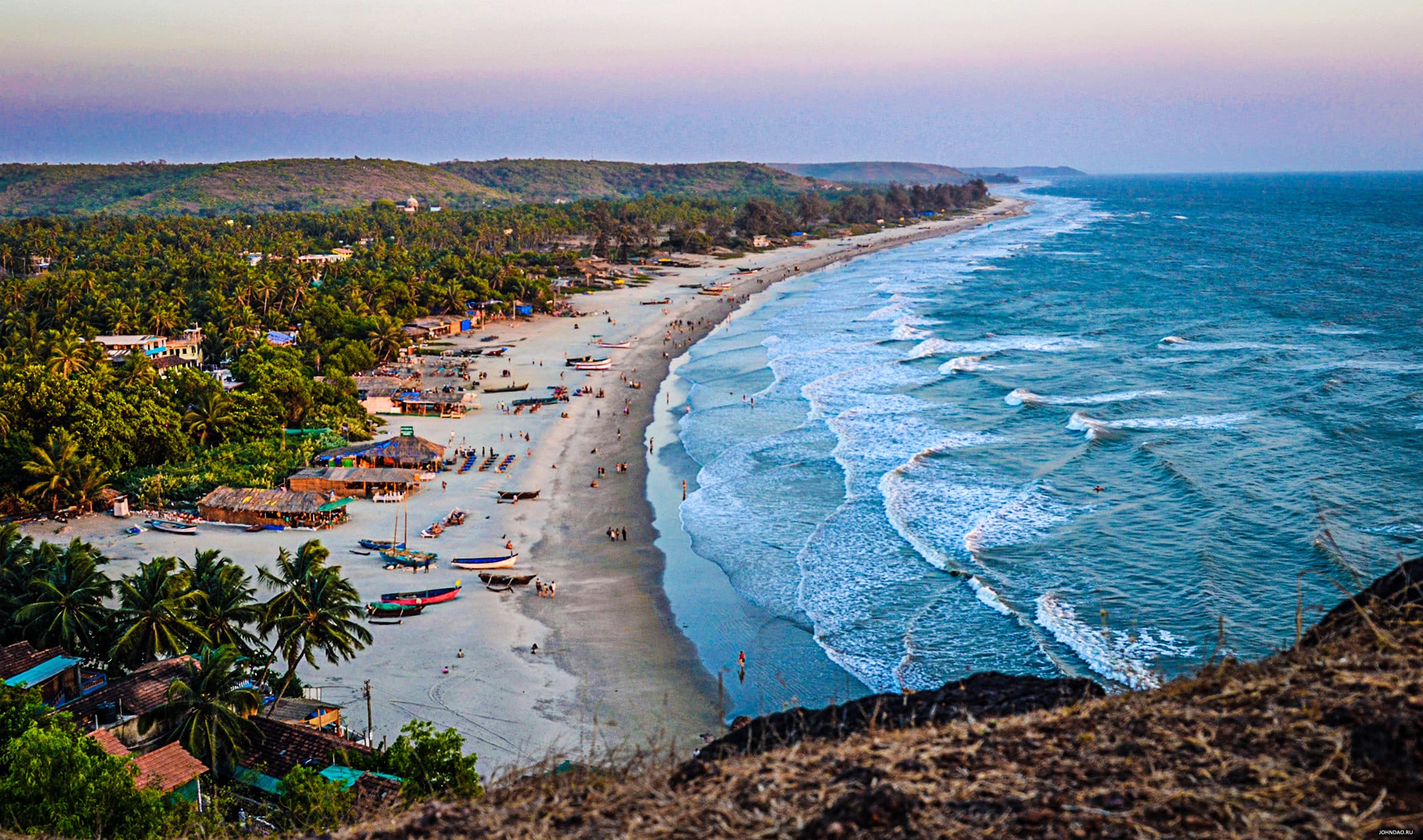
Arambol Beach Guide: Goa's Slower, Bohemian North
Arambol sits at the far edge of Goa's beach belt and has kept a slower, more independent character — a cliff-path lake, an evening drum circle, and a genuinely different pace than the beaches closer to the airport.
 Beach Guides
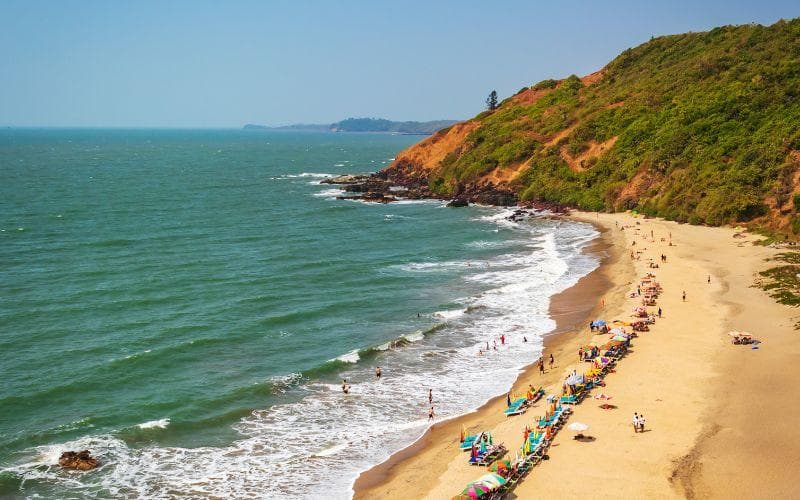
Vagator Beach Guide: Cliffs, Chapora Fort & Where to Stay
Vagator trades flat sand for red laterite cliffs, a working sunset ritual at Chapora Fort, and a small, boutique-leaning stay scene next door to Anjuna.
Ready to Book Your Goa Escape?
Tell us your dates and we'll find the perfect villa, resort or cottage for you — usually within the hour.