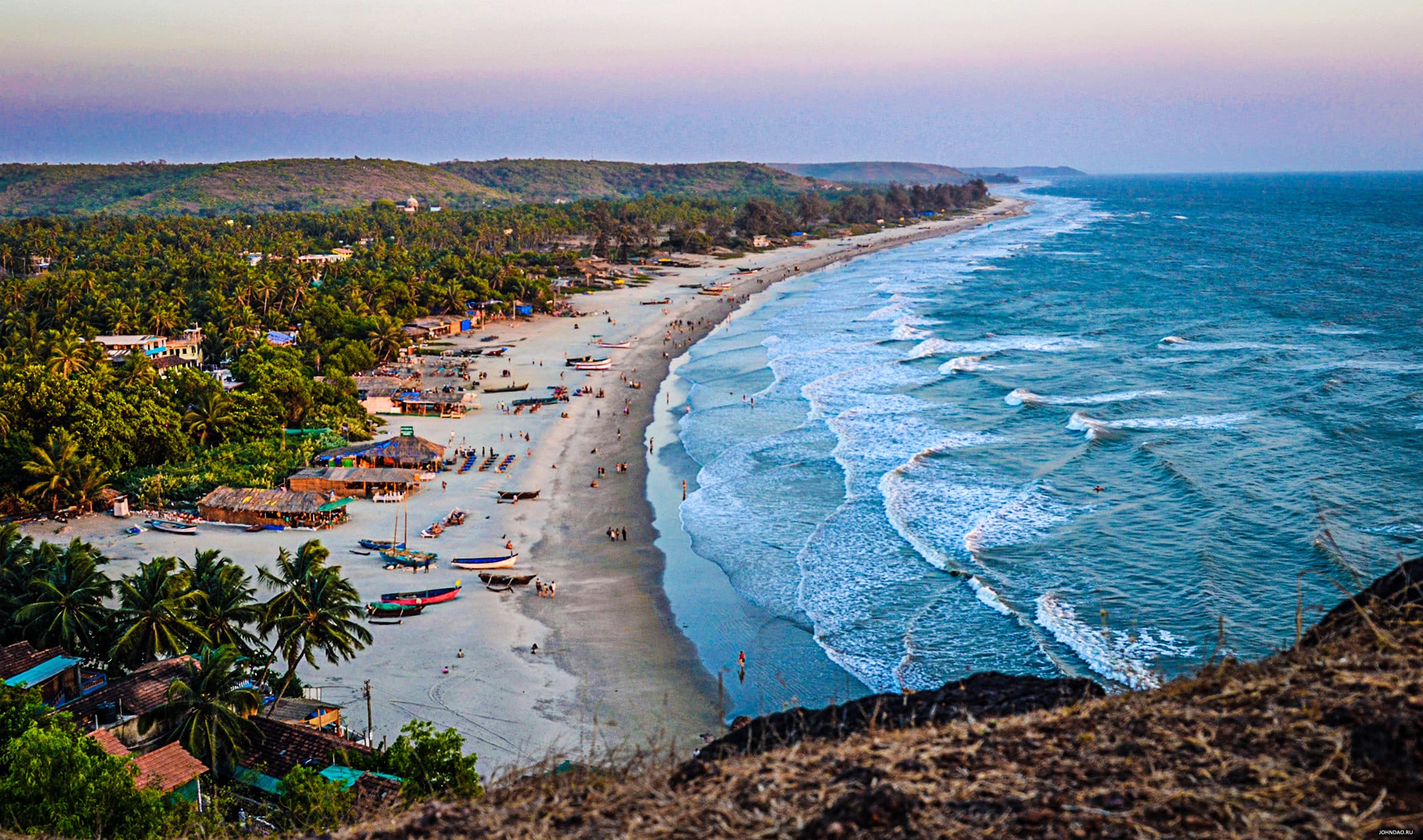
Arambol Beach Guide: Goa's Slower, Bohemian North
Arambol sits at the far edge of Goa's beach belt and has kept a slower, more independent character — a cliff-path lake, an evening drum circle, and a genuinely different pace than the beaches closer to the airport.
About the author
Rajesh Garela
8+ years curating verified stays across Goa
Quick Summary
- Arambol is the furthest north of North Goa's well-known beaches, roughly an hour's drive from Calangute
- Known for its cliff path to a freshwater lake and a genuine evening drum circle rather than a tourist performance
- Attracts a long-stay, independent-traveller crowd more than a short-trip party circuit
- Accommodation in Arambol itself is limited; many travellers pair it with a base slightly further south in Morjim for more choice
What Arambol Actually Feels Like
The first thing most visitors notice is how different the pace is from Calangute or Baga. There's no dense strip of shops and hawkers working the beach; instead there's a long curve of sand backed by guesthouses, yoga studios, and cafés that look like they've been run by the same people for years, because in a lot of cases they have. Arambol has one of Goa's longest-running long-stay traveller populations — people who come for a few weeks and end up staying months — and that shapes the whole feel of the place. It's unhurried without being sleepy, and it has a genuine, lived-in quality that's harder to find on beaches that turn over their visitors every few days.
The beach itself is a wide, open stretch, less commercially built-up than the main North Goa hubs, with beach shacks spaced more loosely rather than wall to wall. It suits slower mornings and long afternoons more than a packed day of activities.
The Cliff Path and Sweet-Water Lake
A footpath runs along the headland at the northern end of the beach, connecting the main sand to a small freshwater lake tucked behind the cliffs — an unusual feature for a Goan beach and a genuinely pleasant walk, especially in the late afternoon before the evening crowd builds. The path itself has become part of Arambol's identity: stalls, small cafés, and a handful of interesting shops line the route, and it's as much a slow browse as it is a walk from one point to another.
The lake is fresh water rather than sea, and it draws its own small crowd separate from the beach — people swimming, floating, or just sitting on the banks. It's a good example of what makes Arambol different from a straightforward beach town: the appeal isn't only the sand, it's the wider stretch of coastline and headland around it.
The Evening Drum Circle
Most evenings, a loose gathering forms on the northern end of the beach around sunset — musicians, dancers, and travellers who've been coming for the same reason for years. It's an actual local tradition rather than something staged for visitors, and it's one of the more genuine communal moments you'll find on any Goan beach. Nobody runs it, nobody charges for it, and it grows or shrinks organically depending on the night and the season. Turning up to sit and listen costs nothing and asks nothing of you; joining in is equally welcome if that's more your pace.
It's worth timing an evening around this at least once if you're staying in the area — not because it's a curated experience built for tourists, but precisely because it isn't.
Arambol vs Mandrem, Ashwem and Morjim
Arambol sits at one end of a loosely connected, low-key stretch of North Goa beaches that also includes Mandrem, Ashwem and Morjim, working roughly south to north. Morjim, closest to the main hubs, has open golden sand, a reputation for turtle nesting in season, and a stronger mix of beachfront resorts alongside its long-stay community. Ashwem and Mandrem sit between Morjim and Arambol and lean toward a boutique, design-conscious crowd — smaller, more curated stays than either end of the stretch. Arambol, at the far end, is the most independent and backpacker-driven of the four, with the deepest long-stay culture and the least resort-style development.
The practical takeaway: if you want the slowest, most independent-traveller version of this coastline, Arambol is it. If you want a similar quieter, less commercial feel but with more beachfront resort choice and easier logistics, Morjim or the area around it makes a more practical base, with Arambol an easy day trip north from there.
Getting There and Getting Around
Arambol is roughly 30–40 kilometres from Calangute, generally a little under an hour's drive depending on traffic and time of day — far enough that most travellers treat it as its own base rather than a quick day trip from the busier southern hubs. Manohar International Airport at Mopa (GOX) is the closer of Goa's two airports for Arambol and the rest of this northern stretch; Dabolim, the older airport, sits down in South Goa and involves a noticeably longer transfer, so it is worth checking which airport your flight actually uses rather than assuming. Once you're there, the village itself is small and walkable, but reaching anywhere beyond it — Mandrem, Ashwem, Morjim, or back toward the airport — realistically needs a scooter or arranged transport. There's no dense taxi rank culture here the way there is in Calangute; arranging a driver in advance, through your stay or in the village, tends to work better than expecting to flag something down easily.
Day Trip Further North: Querim (Keri) and Tiracol Fort
If you want to see how much quieter North Goa can get, Querim — also spelled Keri — sits beyond Arambol at the very edge of the state, reached by a short car ferry across the Tiracol river. The crossing is part of the appeal: it is just enough of a logistical step that casual day-trippers tend to skip it, which keeps Querim close to empty even in peak season. Tiracol Fort sits on the opposite bank, a small seventeenth-century Portuguese fort with a chapel inside its walls, worth the stop if you have already made the crossing.
Querim works better as a day trip built into an Arambol stay than as a base in its own right — there is very little in the way of shacks or infrastructure once you arrive. For travellers who have already spent time on Goa's busier beaches and want a sense of what the coastline looked like before the resort development further south, it is a genuinely worthwhile half-day out from Arambol. A scooter covers the ride from Arambol comfortably within an hour each way, making it realistic as a half-day addition rather than requiring a dedicated overnight stop.
Food and Wellness Culture
Arambol's food scene reflects its long-stay traveller population more than a typical Goan beach town's. Alongside the beach shacks serving fresh seafood, there is a real concentration of cafés built around all-day breakfasts, good coffee, and health-conscious menus — a reflection of how many visitors are here for weeks or months rather than days. Yoga studios and wellness spaces are woven into the village in a way that feels closer to a long-running community than a holiday add-on, and it is common to see the same faces at a morning class and again at the drum circle that evening.
This is worth knowing if your idea of a beach holiday is built around variety and a fast pace of new experiences each day — Arambol rewards settling into a routine more than it rewards constant novelty, and the food and wellness scene is part of that same rhythm rather than a separate attraction.
Who Arambol Suits Best
Independent travellers who want a slower pace and don't mind being an hour from the main nightlife circuit tend to love Arambol. So do people drawn to yoga, wellness, and a genuine long-stay traveller community rather than a short resort break. If you value an unhurried, slightly bohemian atmosphere over convenience and choice, and you're comfortable with a beach town that runs on its own schedule rather than a tourist-board timetable, Arambol is a strong fit. It also suits travellers planning a longer single-location stay — a week or more — over those trying to see several different areas in a short trip. It also suits solo travellers particularly well — the drum circle and the wider café culture make it easy to meet people naturally, without needing to seek out organised social activities the way you might on a more transient, resort-driven beach.
Who Might Prefer a Different Base
It's less suited to short trips built around hopping between multiple beaches daily, given the distance from Calangute and Baga. If you only have two or three days and want to see a lot of North Goa in that window, a more central base like Candolim or Anjuna will cut down significantly on travel time. It's also worth being upfront that Arambol has a smaller, more limited range of accommodation than the bigger hubs — if choice of property type and budget tier matters a lot to you, or you're travelling as a large group wanting a big self-contained resort, you may find more options a short drive south around Morjim.
What First-Timers Should Expect
If your only reference point for Goa is Calangute or Baga, Arambol can come as a genuine adjustment. There is no dense tourist strip, no wall of stalls competing for attention, and evenings are built around the drum circle and quiet cafés rather than clubs or organised nightlife. Some first-time visitors find this an immediate relief; others, expecting a livelier scene, find it takes a day or two to adjust to the pace. Neither reaction is wrong — it is simply useful to know in advance which version of Goa you are walking into, rather than arriving with expectations shaped by a different part of the coast.
It is also worth knowing that Arambol's long-stay culture means you will be sharing the beach and cafés with a mix of short-trip tourists and people who have effectively made the village a temporary home for the season. That mix is part of what gives the area its atmosphere, but it also means service and pace can feel more relaxed, sometimes slower, than at a beach built around fast tourist turnover. Building a little flexibility into your plans goes a long way here.
Combining Arambol With the Rest of North Goa
A rented scooter is the standard way independent travellers cover this stretch of coast, and it comfortably connects Arambol with Mandrem, Ashwem, Morjim and the busier hubs further south within a single day if needed. Taxis and app-based cabs work too, though costs climb if you are moving between beaches more than once or twice a day, and availability thins out late at night in the quieter northern beaches, Arambol included. Because of this, a lot of travellers plan Arambol as a dedicated multi-day stop within a longer North Goa trip, rather than trying to fold it into a single day alongside two or three other beaches.
Where to Stay: In Arambol vs Basing in Morjim
Arambol's own accommodation scene is genuinely thin compared to Goa's bigger tourist hubs — it's dominated by small guesthouses and independent long-stay rentals rather than larger resort-style properties, which is part of what keeps the area feeling low-key. This is worth planning around rather than being caught out by — Arambol was never built up the way Calangute or Candolim were, and its accommodation has grown organically around a long-stay community rather than a resort industry, which is exactly why the area has kept its character. For travellers who specifically want to be right in Arambol, Farol Bay Resort is a beachfront option directly on the open sand, about 300 metres from the beach, with a scale and range of amenities — including an infinity pool and multi-cuisine dining — that's unusual for the area and worth knowing about if you want resort-level comfort without leaving Arambol itself.
For travellers who want more choice in property type, or who are visiting Arambol as part of a wider trip along this stretch of coast, basing yourself a short drive south in Morjim is a genuinely practical alternative, with Arambol easily reachable as a day or evening trip. Tidewood Cottages, on the Arambol–Morjim coast about 600 metres from Morjim beach, offers a beach-facing cottage-style stay that suits the same slower, less commercial atmosphere Arambol is known for. Costa Dourada Resort, right on Morjim's open sand around 200 metres from the beach, is the more full-scale beachfront resort option, with a swimming pool and in-house dining, for travellers who want more resort infrastructure while still staying within easy reach of Arambol's atmosphere.
Which approach makes more sense depends on your trip. If Arambol itself — the drum circle, the cliff path, the specific pace of the village — is the whole point of your visit, staying right there is worth the more limited choice. If you want a bit more flexibility in property style and a slightly easier base for exploring the wider coastline, Morjim is close enough that you lose very little.
Budget Expectations
Arambol generally sits toward the more affordable end of North Goa's spectrum, in keeping with its guesthouse-driven, long-stay character rather than a resort economy. That said, it is not uniformly budget — properties like Farol Bay Resort sit at a higher, more resort-oriented price point than the simpler guesthouses that make up most of the village. As with anywhere in Goa, prices shift meaningfully between the winter peak season and the quieter months, so it is worth checking current rates directly with your chosen stay rather than assuming a fixed price year-round.
A Sample Day (or Longer Stay) in Arambol
A relaxed day here might start with an early swim while the beach is still quiet, followed by a slow walk up the cliff path toward the sweet-water lake, stopping at a café or two along the way. Afternoons suit reading, yoga, or simply sitting somewhere with a view — Arambol doesn't reward a packed itinerary the way a shorter trip elsewhere might. As evening comes in, head to the northern end of the beach for the drum circle, then dinner at one of the village's long-running cafés. If you're staying longer than a few days, it's worth using at least one day to explore south toward Mandrem and Ashwem, or to base a day around Morjim if that's where you're staying instead.
Seasonal Considerations
Arambol follows the same broad seasonal pattern as the rest of North Goa — busiest and driest from November through January, quieter and hotter in the shoulder months, and significantly changed during the monsoon from roughly June to September, when many smaller guesthouses and cafés scale back or close. Because Arambol's appeal leans so heavily on its community atmosphere — the drum circle, the café culture, the long-stay crowd — the winter season is when the place is genuinely at its liveliest, more so than in areas whose appeal is mainly the beach itself. Visiting well outside this window means a noticeably quieter, more limited version of what Arambol is known for. Booking well ahead for a winter stay matters more here than it might in a bigger hub, simply because the total number of rooms and beds in the village is smaller — a popular guesthouse filling up can mean genuinely limited options nearby, rather than just a short walk to the next available option.
Common Mistakes to Avoid
The most common one is underestimating the distance from the main southern hubs and trying to treat Arambol as a quick add-on to a Calangute-based trip — the drive alone makes that a long day, and it doesn't do justice to what the area is actually about. A related mistake is arriving without any cash on hand and assuming every guesthouse or café will take cards smoothly — better to carry some, especially for smaller, independently run places. The second is assuming Arambol will have the same range and availability of accommodation as a bigger hub; if you're set on staying right in Arambol, book ahead rather than assuming you'll find something on arrival, especially in the winter season. The third is skipping the cliff path and lake because it isn't the "main" beach — it's a genuine part of what makes Arambol distinct, not a minor side attraction. And if you're specifically hoping for the resort-style comfort of a large beachfront property with a big pool, it's worth checking exactly which stays offer that in Arambol itself versus assuming every listing matches that description.
What to Check Before Booking
If you're booking a stay in Arambol itself, check its actual distance from the main beach and from the cliff-path area, since the village spreads out more than it might look on a map. If you're considering basing yourself in Morjim instead and treating Arambol as a day trip, confirm realistic travel time and how you'll get back after an evening drum circle, since options can thin out after dark. And if a specific amenity matters to you — a pool, air conditioning, in-house dining — verify it directly, since Arambol's accommodation mix skews toward simpler guesthouse-style stays more than the bigger resort belts further south.
Frequently Asked Questions
How far is Arambol from Calangute?
Around 30–40 kilometres, roughly an hour's drive depending on traffic — far enough that most travellers treat it as its own base rather than a day trip.
Is Arambol good for a short weekend trip?
It works better for longer stays. If you only have two or three days and want to see multiple beaches, a more central base like Candolim or Anjuna cuts down on travel time. If Arambol is specifically what you want to experience, even a short trip focused entirely on the area can work well — it's short multi-beach hopping that suits it less.
What is the drum circle at Arambol?
An informal evening gathering of musicians and travellers on the beach's northern end, running most evenings around sunset. It's free, casual, and open to anyone who wants to sit and listen or join in — a genuine long-running local tradition rather than something organised for tourists.
Should I stay in Arambol or Morjim?
Stay in Arambol if the village's specific atmosphere — the drum circle, the cliff path, the long-stay traveller community — is the main reason for your trip. Consider basing in Morjim instead if you want more choice in accommodation style and a slightly easier base for exploring the wider northern coastline, with Arambol still an easy trip away.
Is Arambol suitable for families with young children?
It can work, especially for families comfortable with a slower, less structured pace, but Arambol's amenities and accommodation lean more toward independent and long-stay travellers than family-resort infrastructure. Families wanting more resort facilities and a wider choice of family-oriented stays may find Morjim or the bigger North Goa hubs a more straightforward fit.
What should I pack or prepare for differently in Arambol compared to other Goa beaches?
Nothing drastically different from the rest of North Goa, but comfortable footwear for the cliff path, and a flexible mindset around pace and service speed, will serve you better here than a tightly scheduled itinerary. Cash on hand is generally useful too, since some of the smaller cafés and guesthouses run a more informal, less card-friendly setup than bigger resort properties further south.
Stays Featured in This Guide
 Resort
Farol Bay Resort
North Goa, Arambol
₹6,200/night | ₹12,400/night (Nov–Jan ★)
 Resort
Tidewood Cottages
North Goa, Morjim
₹4,200/night | ₹8,400/night (Nov–Jan ★)
 Resort
Costa Dourada Resort
North Goa, Morjim
₹5,500/night | ₹11,000/night (Nov–Jan ★)
Related Guides
Related Articles
 Beach Guides
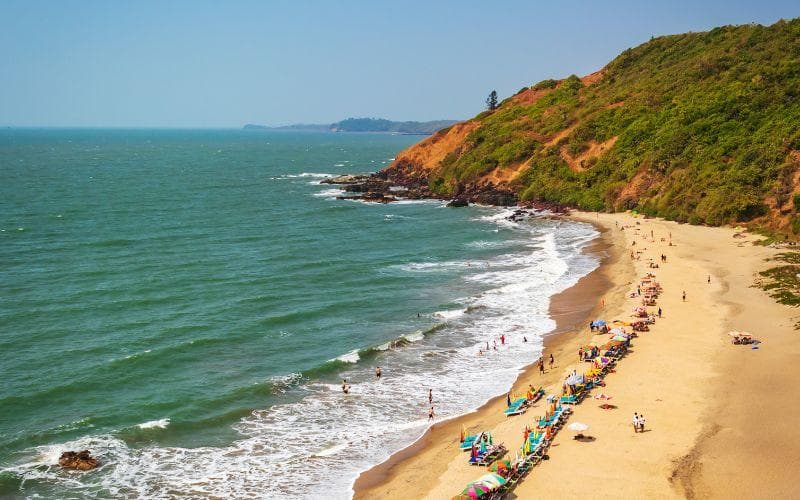
Vagator Beach Guide: Cliffs, Chapora Fort & Where to Stay
Vagator trades flat sand for red laterite cliffs, a working sunset ritual at Chapora Fort, and a small, boutique-leaning stay scene next door to Anjuna.
 Beach Guides
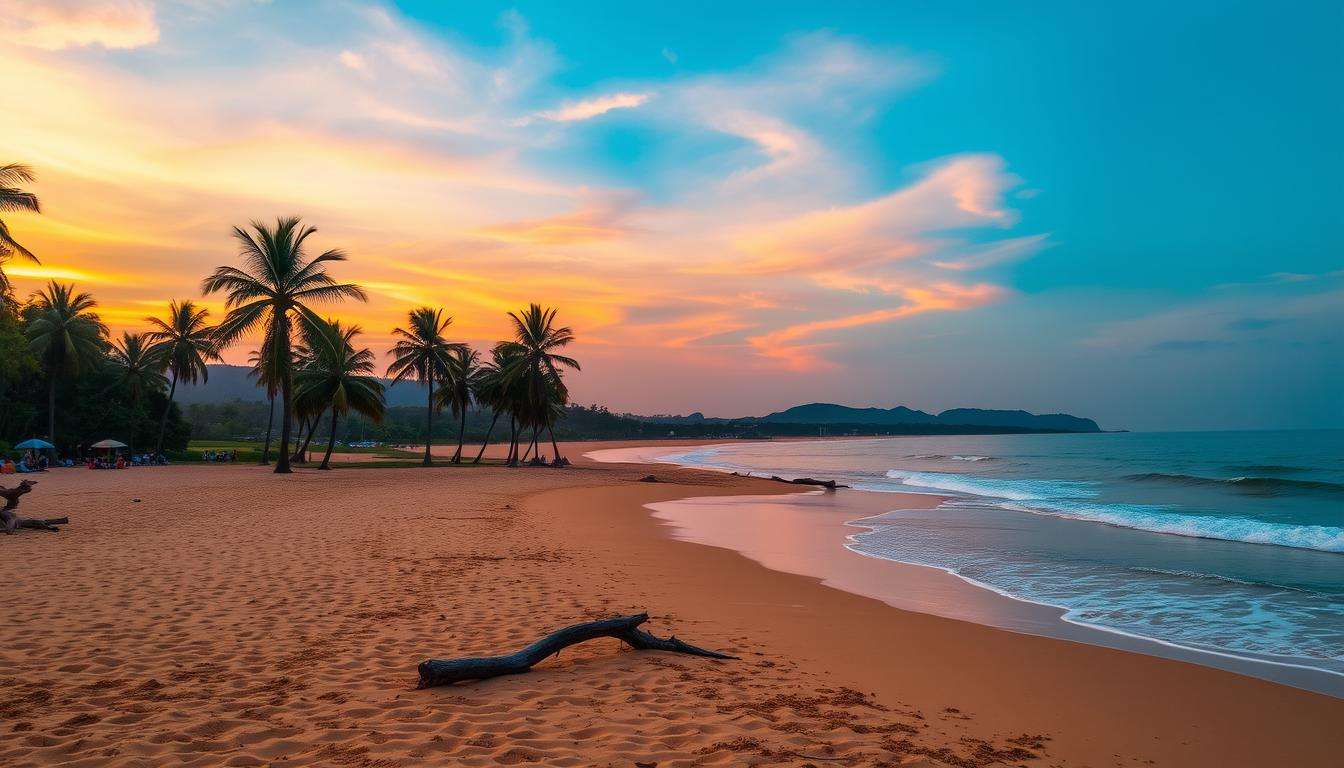
Morjim Beach Guide: Turtle Nesting, Quiet Mornings & Where to Stay
Morjim trades nightlife for turtle nesting and unhurried mornings — a practical guide to what the beach is actually like, who it suits, and where to stay nearby.
Ready to Book Your Goa Escape?
Tell us your dates and we'll find the perfect villa, resort or cottage for you — usually within the hour.