Renting a Scooter in Goa: Prices, Rules & Safety Tips
Renting a scooter is the easiest way to move around Goa's beach belt and a common source of trouble. Rules, paperwork, what to check, and how your choice of stay changes whether you need one.
About the author
Rajesh Garela
8+ years curating verified stays across Goa
Rules, fines and local enforcement change, and some of what follows comes from recent reporting and traveller guidance rather than a single official source. Treat it as a planning guide, confirm current requirements with your rental operator, and do not read anything here as legal advice.
The Short Answer
- Rent only from a registered rent-a-bike operator, and check that the scooter carries a yellow number plate, because privately owned white-plate vehicles are not legally allowed to be rented to tourists
- Carry a valid licence that covers two-wheelers, and an International Driving Permit alongside your home licence if you are visiting from outside India
- Insist on a good-quality helmet for the rider and the pillion, ideally ISI-marked, since operators have been directed to provide ISI-marked helmets
- Photograph the scooter from every angle before you leave, and check fuel level, brakes, lights, mirrors and tyres
- Do not ride after drinking, do not ride three to a scooter, and do not ride on the beach
- If you are not confident on two wheels, choose a stay close to the beach and the market, and use taxis or a driver instead
Do You Actually Need a Scooter?
Most guides assume the answer is yes. It is more useful to ask the question first, because the answer shapes where you should stay and how much stress you carry on the trip.
A scooter makes sense if you are an experienced rider, you plan to move between beaches daily, you want to reach places that taxis charge heavily for, or you are travelling as a pair or small group where each person can ride separately. It is less sensible if you have never ridden, if your trip is mostly pool days and short beach walks, if you are travelling with young children, or if you are visiting in the monsoon, when wet roads and poor visibility raise the stakes.
There are also middle options. Taxis and autos work well for specific trips such as an evening out or an airport run, though fares are commonly negotiated rather than metered, and app-based options have had a patchy history in the state. Hiring a car with a driver for a day or an evening costs more but removes the main safety risk of nights out. Many visitors rent a scooter for a few days, not for the whole trip, and use drivers for the rest.
A useful rule of thumb is to decide based on distance to the things you will do daily. If the beach, a market and a handful of restaurants are within a short walk of your stay, a scooter becomes optional. If your stay is a few kilometres from the sand, a scooter or a driver becomes a daily necessity, and you need to plan for it.
Licence and Paperwork
You need a valid driving licence that covers two-wheelers to ride legally in Goa. Visitors from outside India should carry an International Driving Permit alongside their home licence, and the permit must cover two-wheelers, not just cars. Some operators are relaxed about documents, and some are strict, but the operator's attitude does not change the law or your position if you are stopped or involved in an accident. A licence that covers only cars is a common source of problems, particularly where insurance is involved, because an insurer can treat riding without the right category as grounds to refuse a claim.
Police checks do happen, particularly in North Goa, and they typically look at the licence, the helmet and the vehicle's papers. Keep your licence and permit on you, and ask the operator for a copy of the vehicle's registration or rental paperwork to carry while you ride. Reported fines for riding without a valid licence or helmet run from hundreds to thousands of rupees, and penalties can include disqualification of the licence, so it is worth taking the paperwork seriously regardless of how relaxed the street looks.
Rental Plates, Operators and Why They Matter
Goa's rent-a-bike system is regulated, and rental two-wheelers are registered under the scheme with yellow number plates. This has a practical consequence for visitors. Local authorities have repeatedly warned that private white-plate vehicles may not be rented out for commercial use, and the guidance to tourists has been to avoid hiring them, because the penalty can land on the person riding rather than the owner. If a friendly stranger offers you a bike at a better price, and it carries a white plate, it is the wrong deal.
Choose an operator that issues proper paperwork, shows you the vehicle's registration, explains the deposit and the damage terms in writing, and has a phone number that is answered. A small, established shop near where you are staying is usually a better bet than the cheapest online offer, because you know where to go if something breaks. Read the agreement before you sign it, and ask what happens if the scooter is stolen, damaged in an accident or fails to start on a day when you need it.
Authorities have also moved on helmet quality. Rent-a-bike operators have been directed to provide ISI-marked helmets, and an operator may risk its permit if a rented bike is involved in an accident where the rider was not wearing one. In practice, helmet quality varies, so look at what you are being handed. A helmet that fits properly, has an intact strap and a visible ISI mark is the minimum. If you have your own helmet, bringing it is a good option, and a child-size helmet is something to arrange in advance rather than assuming a shop will have one.
What to Check Before You Ride Away
A rental scooter has typically been ridden hard by many people, so a five-minute inspection is worth more than any negotiation on price.
- Walk around the scooter and photograph every scratch, dent and crack, including both sides, the front and rear, the mirrors and the footboard, with the date visible if possible
- Check the brakes front and rear, the horn, the indicators, the headlight, the brake light and both mirrors
- Look at the tyres for tread and obvious damage, and check that the seat locks and the storage compartment opens
- Note the fuel level and agree how it will be returned, since fuel is typically not included in the rental price
- Confirm what the deposit is and in what form it is held, and be cautious about leaving an original passport as security if a cash deposit or a copy is offered instead
- Ask what insurance cover applies, what the excess is, and what you are responsible for if the scooter is damaged or stolen
- Save the operator's phone number, and ask what to do if the scooter breaks down or you are involved in an accident
- Take a short test ride in a quiet lane before heading onto a main road, especially if you have not ridden for a while
When you return the scooter, ask the operator to inspect it with you present and take a photo of the final condition and fuel gauge. That removes most of the disputes that arise from pre-existing damage.
Pricing and What Changes It
Rental rates vary by scooter type, rental length, season and operator. Rates are generally lower per day on a weekly rental than on a single day, and a standard automatic scooter is the usual choice and the cheapest. In general, expect rates in the range of a few hundred rupees a day for a standard scooter in ordinary months, with higher rates in peak season and for larger or more powerful bikes. Because rates move and vary by operator, treat any figure as a starting point for comparison and confirm the price in writing.
Think about the full cost, not only the daily rate. Fuel is separate. The deposit is typically held until return. A cheap rate with a tight damage clause can end up costing more than a slightly higher rate with clear terms. A helmet that is included is a sign of a better operator than one that charges extra for it.
If you are staying a long time, weekly or monthly rates can change the maths, but the paperwork and plate points above matter even more for longer rentals, because you have more time to be stopped.
Rules You Will Be Held To
Rental operators in Goa have been asked to have riders sign an undertaking that lists the main road safety rules, and it is worth reading as a statement of what enforcement cares about. The main points are straightforward.
- Wear a helmet, as both the rider and the pillion
- Do not ride three to a scooter, which is treated as a separate offence
- Do not ride after drinking, since drink riding carries some of the heaviest penalties in the undertaking
- Do not use a mobile phone while riding, and mount a holder or let the passenger navigate instead
- Do not perform stunts or ride in a rash or negligent manner
- Do not ride on the beach, which has attracted police action
- Follow signs and restrictions on particular roads and bridges, including the closure of the Atal Setu bridge in Panaji to two-wheelers, which the state has reported tourists breaching
Penalties vary by offence and can include fines and licence disqualification, and the amounts change, so check the current position with your operator rather than relying on a figure from an article.
Riding in Goa: What Is Different
Goa's roads are not the hardest in the world, but they have habits that catch visitors out. Traffic in the beach belt thickens quickly in peak season, particularly in the evening when everyone is heading to the same few places. Roads can be narrow, shared with pedestrians, cattle, stray dogs and parked cars, and many stretches away from the main strip are poorly lit after dark. Junctions are informal. Overtaking is common and often unpredictable. If you are used to orderly traffic, you may find the first day tiring.
Several practical habits help. Ride slower than you think you need to, and leave more space than feels natural. Avoid riding at night if you can, and especially avoid it after drinking. Do not rely on the rider to hold a phone for directions, since that is a known source of accidents, and ask the pillion to navigate instead. Be extra cautious in rain, when painted road markings and wet leaves are slippery and visibility drops. Goa's public concern about rental scooter accidents is long-standing, and recent reports of collisions involving tourists on rented scooters are a reminder that the main risk is unfamiliarity with local roads rather than the vehicle itself.
The monsoon deserves its own warning. Our standard-season pricing runs from February to October, which includes the rainy months, and travellers who visit then often find lower rates and quieter beaches. It is also the season when a scooter is hardest to justify, because wet roads and sudden downpours change the risk. If you visit in the rain, think carefully about whether a driver or taxi suits you better.
Where to Stay Depends on How You Will Move
This is the part most scooter guides skip, and it is the one that most affects your trip. Your accommodation sets your daily travel pattern, and the distances in our verified listings show how much that varies.
If you do not want to ride
Choose a property that puts the beach and a market within a short walk. In our listings, Casa Luma Villa in Candolim and Azuremere Villa in Calangute are both listed at roughly 100 to 150 metres from the beach, and Baía Serena Resort in Calangute is about 100 metres from the sand. Cliffshade Beach Resort in Calangute is about 200 metres from the beach and 0.7 km from the market, and Azure Tide Resort in Baga is about 500 metres from both Baga Beach and Baga Market. In Candolim, Coral Breeze Hotel and Windward Bay Resort are each about 400 metres from the beach. These are the stays where you can build a trip around walking and the odd taxi.
If you will ride
Stays that are further from the sand work well if you have a scooter or a driver. Casa Verdant Villa in Candolim is listed at about 1.2 km from the beach, Kokum Grove Resort in Calangute at about 1.4 km, Citrine Grove Villa in Arpora-Baga at about 2 km, Quinta Verde Villa in Calangute at about 2.2 km, and Lagoonside Resort in Arpora-Baga at about 2.5 km. They offer more space, more privacy and often a calmer setting, but they assume that someone in your group can get you to the beach, to dinner and back. If nobody in the group is comfortable riding, plan for a driver or regular taxis, and ask us about options before you book.
Scooter distances across the belt are short in our listings. Calangute stays are generally about 2 km from Baga Beach, and Candolim stays are about 2.7 to 3.5 km from Calangute Beach. Fort Aguada is listed at about 2.2 to 3 km from our Candolim stays, and Arpora's Saturday Night Market is about 1 to 2.8 km from our Baga-area stays. These are the sort of distances where a scooter saves a lot of time and where a taxi quickly becomes expensive if you do it every day.
Parking and storage
Most of our resorts and villas list free parking, and several villas list private parking. Before you rent a scooter, ask whether there is room to park it securely overnight and whether it can be locked, and confirm space if you are travelling with more than one vehicle.
Scooter, Taxi or Driver: A Straight Comparison
The honest comparison is less about cost than about control and risk.
- A scooter gives you the most freedom and the lowest daily cost, and the highest personal risk, especially for inexperienced riders and in the dark
- Taxis and autos remove the riding risk, but fares are typically negotiated and add up when you travel daily, and availability can be thin late at night
- A car with a driver costs the most per day but suits groups, evenings out and day trips, and it is the safest way to handle a night in Baga or a long day to a fort or market
- A mix works for most people: a scooter for a few daytime days, and a driver for evenings and any trip you do not want to ride
If your group includes someone who has been drinking, or if you are heading home from an evening in a busy area, the right answer is not a scooter. Decide before you go out how everyone will get back.
Travelling With Children and Mixed Groups
Scooters and small children do not mix well. Child-size ISI helmets are hard to find at rental shops, and a pillion who cannot hold on securely is a real risk. If you are travelling with young children, a car with a driver and a stay that is close to the beach is usually a better plan, and a resort with its own pool and restaurant removes many short trips altogether.
For mixed groups, such as couples or friends where only some are confident riders, a good approach is to rent one or two scooters for the confident riders and use taxis for everyone else. Do not let a less experienced person ride because the group needs another vehicle, and do not carry three on one scooter.
Common Mistakes
- Renting a white-plate private vehicle because it was cheaper or offered by someone informal
- Skipping the walk-around photos and then being charged for existing damage
- Riding on a car-only licence or without the International Driving Permit
- Accepting a cheap, poorly fitting helmet and riding anyway
- Using a phone for directions while riding rather than asking the pillion to navigate
- Riding after drinking, or after a long day when everyone is tired
- Choosing a stay several kilometres from the beach and assuming a scooter will solve every problem
- Renting for the whole trip when a mix of scooter and driver would have been safer and easier
A Short Checklist
- Licence and, if needed, International Driving Permit that cover two-wheelers
- A yellow-plate scooter from a registered operator, with paperwork
- A properly fitting helmet for every rider and pillion
- Dated photos of the scooter before and after
- A clear understanding of deposit, insurance, damage and fuel terms
- The operator's phone number and your plan for breakdowns
- A decision about how you will get home after dinner or a night out
Frequently Asked Questions
Do I need an international licence to rent a scooter in Goa?
To ride legally, visitors from outside India should carry an International Driving Permit alongside their home licence, and it should cover two-wheelers. Enforcement and operator strictness vary, but the requirement does not change.
Why do rental scooters in Goa have yellow number plates?
Rental two-wheelers are registered under the rent-a-bike scheme and carry yellow plates. Private vehicles with white plates are not allowed to be rented out commercially, so tourists are advised to avoid them.
Are helmets mandatory in Goa?
Yes, for both the rider and the pillion. Operators have also been directed to provide ISI-marked helmets, so check the one you are given.
Is fuel included in the rental price?
Usually not. Budget for fuel separately and agree in advance how the scooter should be returned.
Can I ride on the beach?
No. Riding on the beach is listed among the prohibited acts in the rental undertaking and has attracted police action.
Is it safe to ride a scooter in Goa?
It can be, for experienced riders who respect the rules and avoid night riding and drinking, but the risk is real, and rental scooter accidents involving tourists are a long-standing concern. If you are not confident, use a taxi or a driver.
How much does it cost to rent a scooter?
Rates vary by operator, season and rental length, and are typically a few hundred rupees a day for a standard scooter in ordinary months, with higher rates in peak season. Confirm the price, the deposit and the damage terms in writing.
Should I stay somewhere that needs a scooter?
Only if someone in your group is comfortable riding or you have arranged a driver. If not, choose a stay within a short walk of the beach and a market.
A Practical Next Step
If you are choosing a stay and unsure whether you will rent a scooter, tell us how you plan to get around, who in your group is comfortable riding, and your dates. We can point you to the verified stays that suit your plan, including those where you can manage on foot and a few taxis. You can message us on WhatsApp from any stay page.
Stays Featured in This Guide
 Resort
Havelock Calangute Hotel
North Goa, Calangute
₹2,400/night | ₹4,800/night (Nov–Jan ★)
 Resort
Cliffside Canopy Cottages
North Goa, Vagator
₹4,500/night | ₹9,000/night (Nov–Jan ★)

 Resort
Azure Tide Resort
North Goa, Baga
₹4,200/night | ₹8,400/night (Nov–Jan ★)
 Resort
Baía Serena Resort
North Goa, Calangute
₹5,000/night | ₹10,000/night (Nov–Jan ★)
 Resort
Cliffshade Beach Resort
North Goa, Calangute
₹2,900/night | ₹5,800/night (Nov–Jan ★)
 Villa
Casa Luma Villa
North Goa, Candolim
₹22,000/night | ₹45,000/night (Nov–Jan ★)
 Villa
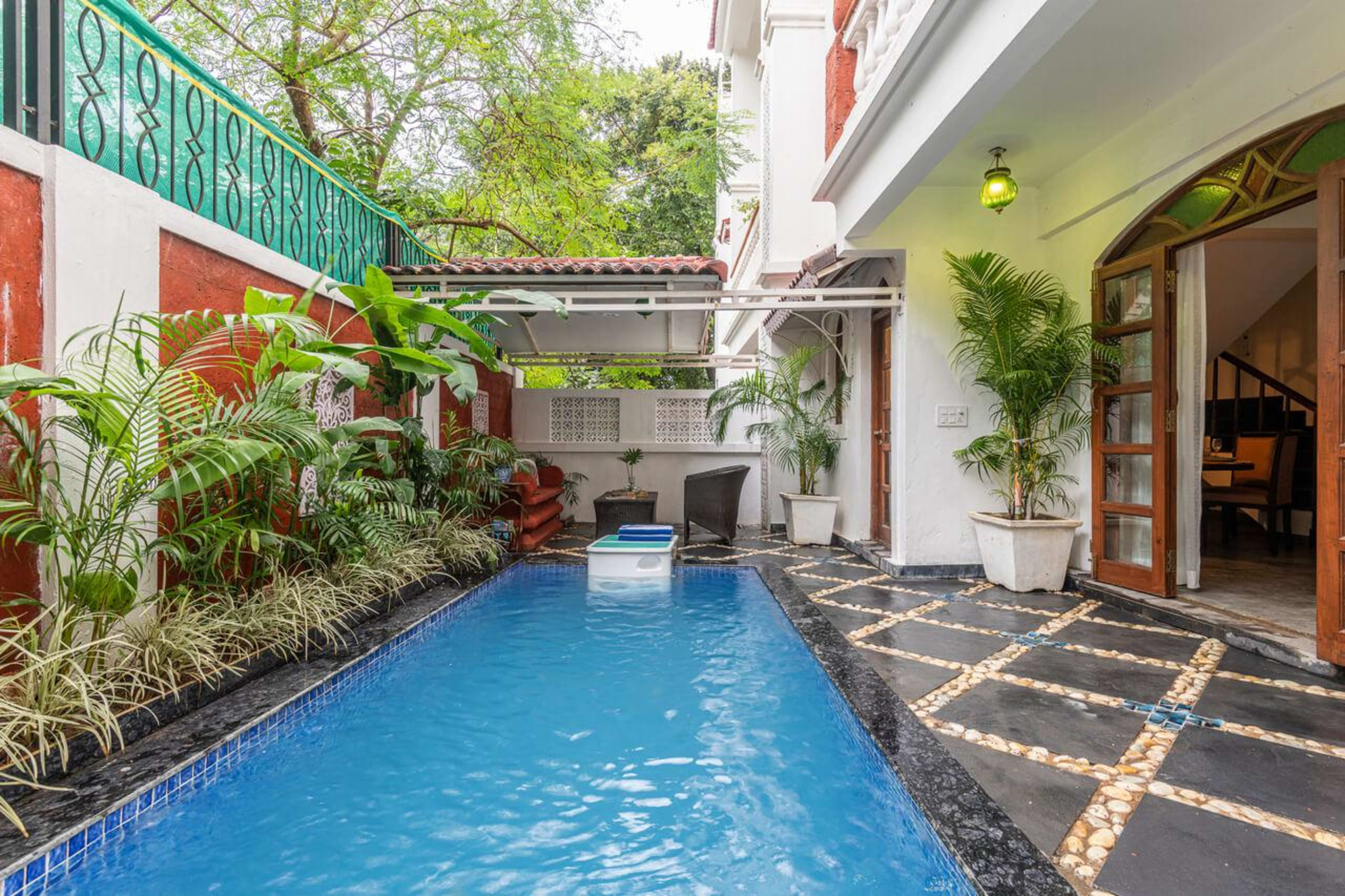
Casa Verdant Villa
North Goa, Candolim
₹28,000/night | ₹56,000/night (Nov–Jan ★)
Related Guides
Related Articles
 Travel Tips
Varca vs Cavelossim vs Colva: Choosing a Resort Base in South Goa
Three South Goa resort belts, three different paces. How to choose between Varca, Cavelossim and Colva-Betalbatim, and which of our verified resorts suit each trip.
 Travel Tips
Dabolim vs Manohar International Airport: Which Is Better for Your Goa Stay?
Goa has two airports, and which one saves you time depends on your exact stay, not just North Goa versus South Goa — a practical, area-by-area guide to comparing Dabolim and Mopa before you book flights.
Ready to Book Your Goa Escape?
Tell us your dates and we'll find the perfect villa, resort or cottage for you — usually within the hour.