Family-Friendly Goa: Top Activities & Where to Stay
Calm beaches, kid-friendly resorts and a realistic pace — a practical, area-by-area guide to planning a Goa trip that actually works with children in tow.
About the author
Rajesh Garela
8+ years curating verified stays across Goa
Quick Summary
- Calangute, Candolim and Morjim have the calmest, flattest beaches for younger kids
- North Goa suits most first-time family trips; South Goa rewards families who want a slower, quieter pace
- Resorts with daily kids' activity schedules take real pressure off parents; private-pool villas suit families who'd rather stay contained
- Avoid packing the itinerary too tight — kids slow down the pace, and the trip works better if you plan for that rather than fight it
North Goa vs South Goa for Families
Most family trips to Goa default to North Goa, and for good reason — Calangute, Candolim and the surrounding belt have the highest concentration of family-oriented resorts, pharmacies, supermarkets and paediatric-capable clinics, plus beaches that are genuinely easier to manage with young children than the more dramatic coastline further north at Vagator or Anjuna. If this is your first family trip to Goa, or you're travelling with children under six, North Goa's density of infrastructure is worth prioritising over South Goa's quieter appeal.
South Goa isn't off-limits for families — Colva and Benaulim in particular have wide, flat sand that works well for kids, and the overall pace is slower and less crowded than the Calangute-to-Baga stretch. Where South Goa struggles slightly is density: fewer resorts built specifically around kids' programming, and longer drives between amenities if something's needed urgently. It suits families on a second or third Goa trip who already know they want a quieter version, more than it suits a first visit with very young children.
Choosing the Right Beach
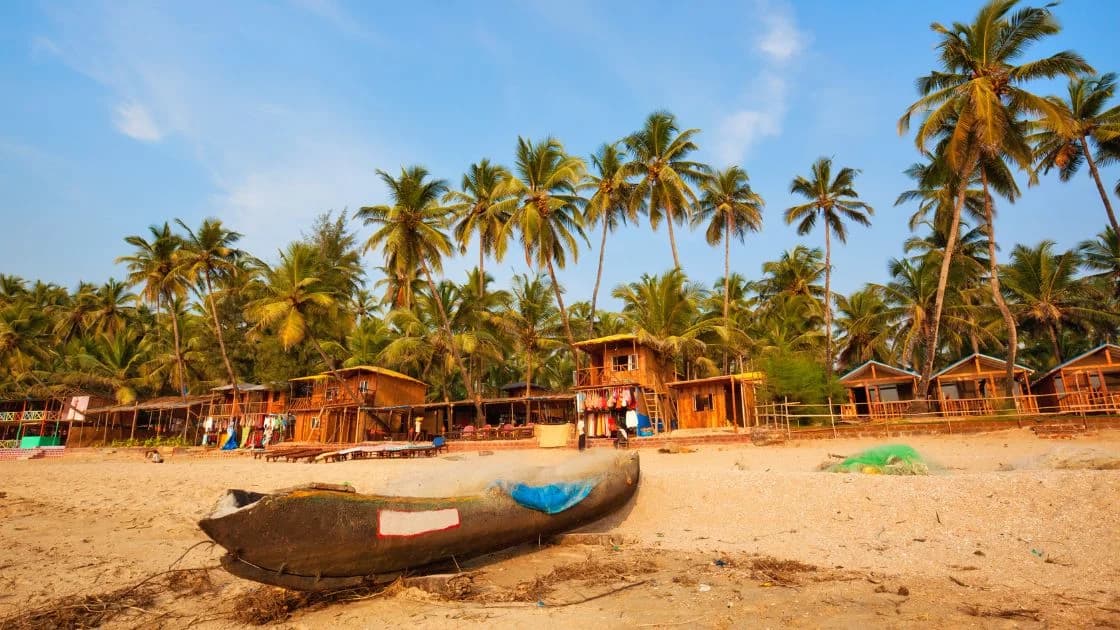
Beach choice matters more with kids than it does for most other kinds of trips, because the physical shape of the sand and the slope into the water genuinely changes how manageable a day at the beach is. Calangute and Candolim's wide, flat sand is easier to supervise than Vagator's cliffs or Anjuna's rockier stretches, and the gentler slope into the water at both means less sudden depth change close to shore. Morjim's shore is gentler still and considerably quieter than the main Calangute-Baga cluster, which makes it a solid option if you want something calmer without leaving North Goa's infrastructure behind entirely.
Avoid building a family day around Vagator, Anjuna or Chapora specifically — the cliffside terrain and rockier entry points that make those beaches scenic for couples and photographers make them genuinely harder to supervise young children on, and the appeal of those spots (dramatic views, quieter cliffside cafés) isn't really what a family beach day needs anyway. They're fine as a short adults-only outing if you have childcare sorted for an afternoon, but not as the base of a family beach routine.
Swimming Safety: What's Actually Realistic
Goa's beaches carry real currents in places, and it's worth being straightforward about that rather than assuming every calm-looking stretch of sand is automatically safe for kids to swim unsupervised. Lifeguard presence varies by beach and season — Calangute and Candolim have lifeguard coverage during the main season, but coverage isn't guaranteed to be constant along the full length of either beach, and it thins out considerably outside peak months. Flagged safe-swimming zones exist at the more developed beaches for a reason; treat them as the actual boundary for young swimmers rather than a suggestion.
Rip currents can develop even on beaches that look calm on the surface, particularly during and just after monsoon season and around the shoulder months when conditions are less predictable. The practical rule that applies across this entire coast: never let young children swim unsupervised, avoid swimming altogether during rough weather regardless of how the water looks near the shore, and check with your resort or stay about current local conditions on arrival rather than relying on general assumptions from a previous trip.
Younger Kids vs Teenagers: Different Trips, Same Destination
A family trip to Goa looks meaningfully different depending on the ages involved, and it's worth planning around that difference rather than using one itinerary for every age group. With toddlers and younger children, the trip is really built around the beach and the stay itself — shorter outings, an early start to beat the heat, a long midday break, and minimal driving between activities. A private-pool villa or a resort with a shallow kids' pool often ends up mattering more than the beach itself at this age, since a lot of the actual daily routine happens on the property rather than out exploring.
Older kids and pre-teens can handle more variety — water sports at Calangute or Candolim (banana boats, jet-skiing, parasailing with age and weight restrictions that vary by operator), a half-day at Fort Aguada, or a boat trip if the whole family is up for it. Teenagers, meanwhile, often want a genuinely different kind of trip than younger siblings — more independence, later nights, and less patience for family-paced sightseeing days. Splitting the itinerary occasionally, with an adult accompanying teenagers to somewhere like Anjuna's flea market or a cliffside café while a second adult keeps younger kids on a familiar beach, tends to work better across a mixed-age family trip than trying to keep everyone on the same schedule for the whole visit.
Resorts vs Villas for Families
Resorts with a structured kids' activity schedule genuinely help — they give children something age-appropriate to do and give parents an actual break, which a self-catered villa can't replicate on its own no matter how nice the property is. This matters more with a wider age range of kids, since a good resort programme can occupy an eight-year-old and a fourteen-year-old separately rather than forcing them into the same activity. It also matters if you're travelling with just one adult per child, since resort staff and structured programming take some of the constant-supervision load off a single parent.
A private-pool villa suits families who'd rather keep everything contained to one property, particularly with very young children where a shared resort pool is less practical — no queuing for pool access, no need to police other guests' behaviour around toddlers, and the ability to set your own schedule entirely rather than working around resort meal times and activity slots. Villas also tend to work better for larger extended-family trips, where grandparents, parents and kids all want their own space under one roof rather than several separate hotel rooms. The trade-off is that a villa doesn't come with the built-in supervision and entertainment a good resort programme offers, so it puts more of the day-to-day activity planning back on the parents.
Room and Sleeping Arrangements
It's worth checking sleeping arrangements specifically before booking, rather than assuming a listed 'sleeps 6' or 'family room' configuration matches what your family actually needs. Some family rooms use a single larger bed plus a sofa bed or rollaway rather than genuinely separate sleeping spaces, which works fine for younger kids but can feel cramped with teenagers who want their own space. If a cot or crib is needed for an infant, confirm it's available and ask what's actually provided (many stays supply a basic travel cot rather than a full crib) rather than assuming from the listing alone.
For villas specifically, check how bedrooms are actually laid out — some multi-bedroom villas put all rooms on one level, which is easier with very young kids or if anyone in the group has mobility considerations, while others spread bedrooms across floors, which can work better for privacy between parents and older kids or between multiple family units sharing the property.
Family-Friendly Activities Beyond the Beach
Fort Aguada, at Candolim's southern end, is a genuinely manageable half-day outing for most families — it's a compact, largely flat site with real historical interest, and the fort and lighthouse are both accessible without a serious climb. Go before mid-morning to avoid the worst of the heat, since there's limited shade once you're up on the ramparts. Chapora Fort, further north near Vagator, is a steeper and less shaded option that suits older kids better than toddlers.
Water sports — parasailing, jet-skiing, banana boats — are concentrated mainly around Calangute, Baga and Candolim, and most operators apply age and weight minimums that vary by activity and operator, so it's worth asking directly on the day rather than assuming a younger child will be allowed to participate. Dolphin-watching boat trips, more commonly associated with South Goa's Palolem and Benaulim but available from a few North Goa operators too, are a reasonable family activity that doesn't require anyone to actively swim, which can suit families with a wide age range or a nervous swimmer among the kids.
The Anjuna flea market (Wednesdays) and the Saturday Night Market at Arpora (seasonal, roughly November through April) are both worth a family evening if the timing lines up, though they get genuinely crowded, so they suit families with older kids better than ones with toddlers in strollers.
Food and Meal Planning
Most beach shacks and resort restaurants across Calangute, Candolim and Morjim are used to family diners and generally offer simpler options — plain rice, basic grilled items, fries — alongside the main Goan menu, even if it's not formally listed as a children's menu. Fish curry rice, the everyday local staple, is mild enough for many kids to eat comfortably, though it's worth asking about spice level specifically if you're unsure, since preparation varies between kitchens.
If you're travelling with an infant or a child with specific dietary needs, it's worth checking with your stay in advance about kitchen access or fridge space, particularly for villas where you may want to prepare some meals yourselves rather than eating out for every meal across a longer trip. Bottled water is the standard choice for kids throughout Goa, and it's worth carrying a reusable bottle you can refill from larger containers at your stay rather than buying single-use bottles constantly.
Transport and Airport Considerations
Manohar International Airport at Mopa is the closer option for most of North Goa's family-friendly stretch, generally under an hour's drive to Calangute or Candolim, which matters more with young kids than it might on an adults-only trip — a shorter transfer means less time managing a tired, overstimulated child straight off a flight. Dabolim, Goa's older airport in the south, still operates but involves a considerably longer transfer up to this part of the coast, so it's worth checking which airport your specific flight uses rather than assuming.
Within North Goa, a car with a driver is generally more practical for families than a rented scooter, particularly with young children or a larger group needing car seats — most reputable car-hire services can arrange a child seat if you request it in advance, though it's worth confirming this explicitly rather than assuming one will be provided. If older kids and teenagers are along and some independence is welcome, a scooter for one accompanying adult can still make sense as a secondary option for quick solo errands, alongside a car for the main family movement.
Heat and Sun Planning
Goa's midday sun is strong enough that even a mild, overcast-feeling afternoon can leave a child sunburnt by evening, and this matters more with kids than adults since children's skin burns faster and heat exhaustion sets in more quickly. Plan beach time for the morning before 11am or the late afternoon after 4pm, and treat the middle of the day as pool, shade or nap time rather than pushing through it at the beach. Reef-safe sunscreen, reapplied more often than the bottle's default interval in Goa's heat and humidity, along with light, breathable, long-sleeved clothing for the more sun-sensitive hours, makes a genuine difference over a multi-day trip.
Hydration matters as much as sun protection — kids dehydrate faster than adults in this kind of heat and don't always signal it clearly, so building in regular water breaks throughout the day, rather than waiting for a child to ask, is worth doing proactively.
Best Time of Year for Family Priorities
November through February gives the most reliable weather — warm, dry, manageable heat — which is why it's also the busiest and most expensive window for family-friendly stays across this entire coast. If your priority is guaranteed dry weather for beach days, this remains the safest bet, but it's worth booking considerably further ahead than you would for other times of year, since the best family-oriented resorts and villas near Calangute and Candolim fill up early for this stretch, particularly around the Christmas and New Year period.
The shoulder months — October–November and March–April — are worth genuine consideration for families who can be flexible with school schedules, since crowds thin out noticeably at the beaches and attractions covered above, and rates drop from peak-season levels. The trade-off is a slightly higher chance of a stray shower, which matters less with older kids who can adapt to an indoor afternoon than it might with toddlers who are harder to keep entertained off the beach.
Monsoon Considerations for Families
Monsoon season, roughly June through September, is generally not the right window for a family beach trip to Goa. Swimming conditions become genuinely unsafe at several beaches during this period due to rough seas and strong currents, a meaningful number of beach shacks and smaller resorts close or scale back for the season, and the persistent rain makes outdoor activities like Fort Aguada or Chapora Fort considerably less pleasant and, on the fort visits specifically, more slippery underfoot. If your only available travel window falls in monsoon season, it's worth being upfront with yourselves that this will be a different kind of trip — greener countryside, quieter towns, more time spent indoors or at resorts with strong wet-weather facilities — rather than the classic beach holiday most families picture.
What to Check Before Booking a Family Stay
Beyond the standard checks any traveller would make, a few things are worth confirming specifically for a family booking. Ask whether the pool (shared or private) has a shallow end or separate children's pool if travelling with non-swimmers, since not every resort pool is genuinely suitable for young kids despite general marketing language. Confirm whether the property is set up for a cot or extra bed if needed, and what the actual policy is on children sharing existing beds versus requiring a paid extra bed — this varies significantly between properties and affects the real per-night cost of a family booking.
It's also worth asking directly about proximity to the beach and the nature of the walk there — a stay advertised as 'near the beach' can mean anything from a two-minute walk to a fifteen-minute one along a busier road, which matters considerably more when you're managing kids and beach gear than it would for an adults-only trip. Finally, check what's genuinely included versus billed separately — some family-friendly resorts include kids' club access and activities in the room rate, while others charge per session, and that difference can add up meaningfully across a week-long stay.
Building a Realistic Family Itinerary
The single biggest planning mistake families make in Goa is importing an adults-only pace into a trip with kids — trying to cover Calangute, Candolim, Anjuna and Vagator in the same tight schedule a couple might manage. With kids, plan for one real activity a day rather than two or three, built around the natural rhythm of morning beach time, a long midday break, and a shorter late-afternoon outing or pool session. A five-day family trip realistically covers what a three-day adults trip covers, and that's fine — the point of a family holiday is a manageable pace, not maximum coverage.
Keep at least one day genuinely unplanned, particularly on longer trips, as a buffer for tired kids, disrupted nap schedules, or simply a day where nobody wants to leave the pool. Building this in deliberately, rather than treating it as a failure of the schedule if it happens, makes the whole trip considerably less stressful for everyone.
Mistakes Families Commonly Make in Goa
The most common one is booking a stay based purely on photos or price without checking whether it's genuinely set up for children — a beautiful boutique villa with a small infinity-edge pool and minimal railings can be a real hazard with toddlers, regardless of how well it photographs. The second is underestimating drive times and traffic, particularly during peak-season evenings through Calangute and Baga, and scheduling activities back-to-back without a buffer for a slow exit from the beach or a meltdown en route.
A third mistake is skipping the practical checks above — cot availability, pool depth, extra-bed policy — and discovering the gap only after arrival, when options for fixing it are limited. A fourth is assuming every North Goa beach is equally manageable with kids; Vagator and Anjuna's cliffside charm is real, but it's not built for the same kind of family beach day that Calangute, Candolim or Morjim offer.
Frequently Asked Questions
Which North Goa beach is safest for kids?
Calangute, Candolim and Morjim all have flatter, more gently sloping sand than Vagator or Anjuna, making them easier to supervise with younger children. Stick to flagged safe-swimming zones where available and avoid the rockier, cliffside beaches for young kids specifically.
Should I book a resort or a villa for a family trip?
Resorts with daily kids' activities take pressure off parents and suit families wanting structure, particularly with a wide age range of children. Villas with a private pool suit families who'd rather keep everything on one property and set their own schedule, particularly with very young kids or larger extended-family groups.
What's the best time of year for a family trip to Goa?
November to February gives the most reliable weather, though it's also the busiest and priciest window — worth booking stays well ahead if travelling during this period. October–November and March–April offer a reasonable compromise of thinner crowds and lower rates for families who can be flexible.
Is North Goa or South Goa better for a family trip?
North Goa generally suits a first family trip better, thanks to its density of family-oriented resorts, amenities and calm beaches. South Goa's Colva and Benaulim are also genuinely family-friendly and worth considering on a return visit if a quieter pace is the priority.
Do I need a car seat when travelling around Goa with young children?
It's worth arranging one in advance through your car-hire service if you're travelling with a young child, since not every taxi or rental car comes with one by default. Confirm this explicitly when booking rather than assuming it's included.
What should I pack specifically for a Goa trip with kids?
Reef-safe sunscreen, light and breathable long-sleeved clothing for peak-sun hours, a reusable water bottle, and any specific items (travel cot, favourite snacks, basic medication) that can be harder to source locally on short notice. Confirm cot and extra-bed availability with your stay before travel rather than packing around an assumption.
Goa can absolutely work as a family destination, but the trips that go well are the ones where the beach, the stay and the daily pace are all chosen with the specific ages of the kids in mind, rather than borrowed from a generic Goa itinerary built for a different kind of traveller.
Stays Featured in This Guide
 Resort
Kokum Grove Resort
North Goa, Calangute
₹4,400/night | ₹8,800/night (Nov–Jan ★)
 Villa
VillaCasa Verdant Villa
North Goa, Candolim
₹28,000/night | ₹56,000/night (Nov–Jan ★)
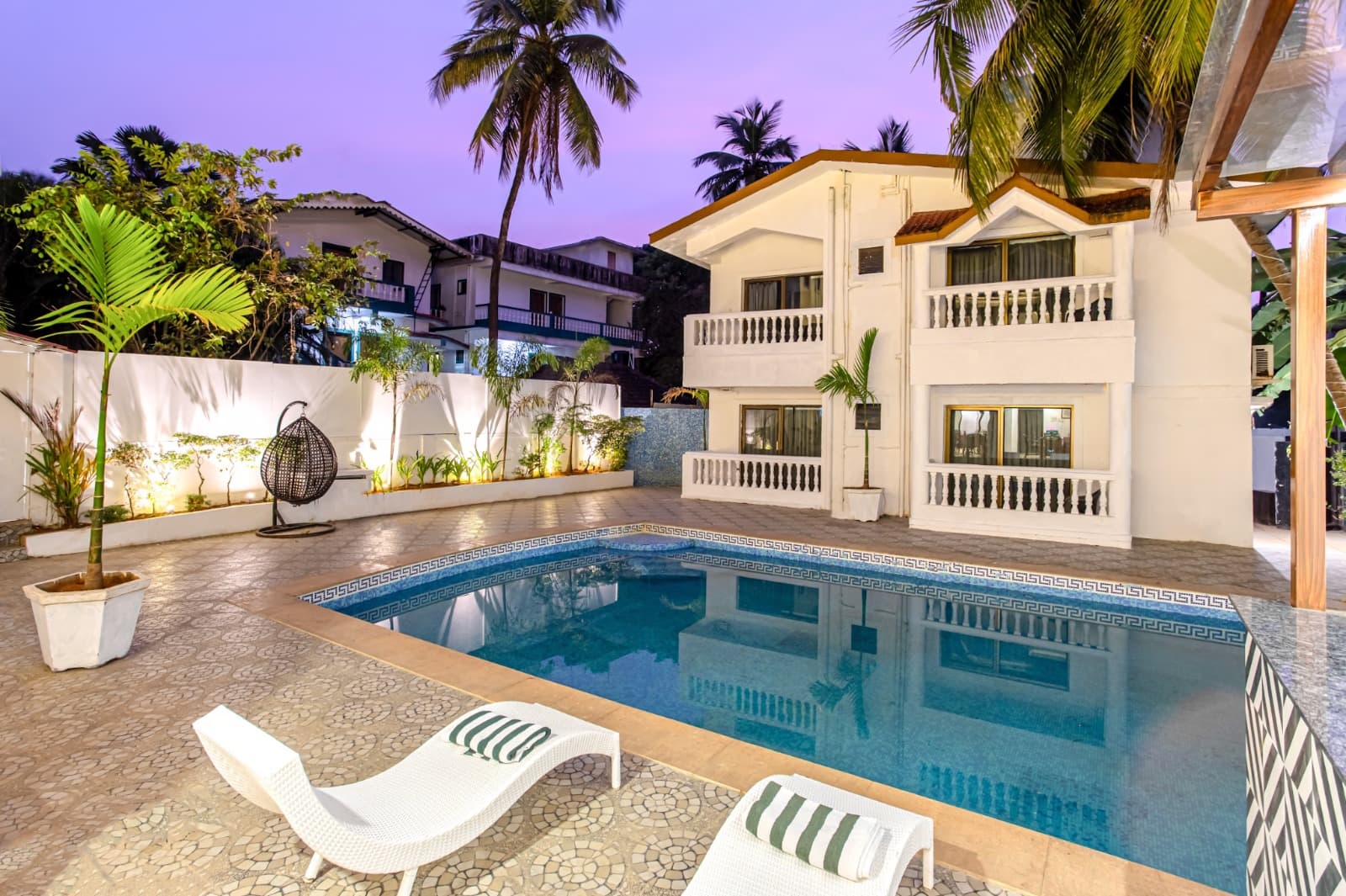 Resort
Baía Serena Resort
North Goa, Calangute
₹5,000/night | ₹10,000/night (Nov–Jan ★)
 Resort
Tidewood Cottages
North Goa, Morjim
₹4,200/night | ₹8,400/night (Nov–Jan ★)
Related Guides
Related Articles
 Beach Guides
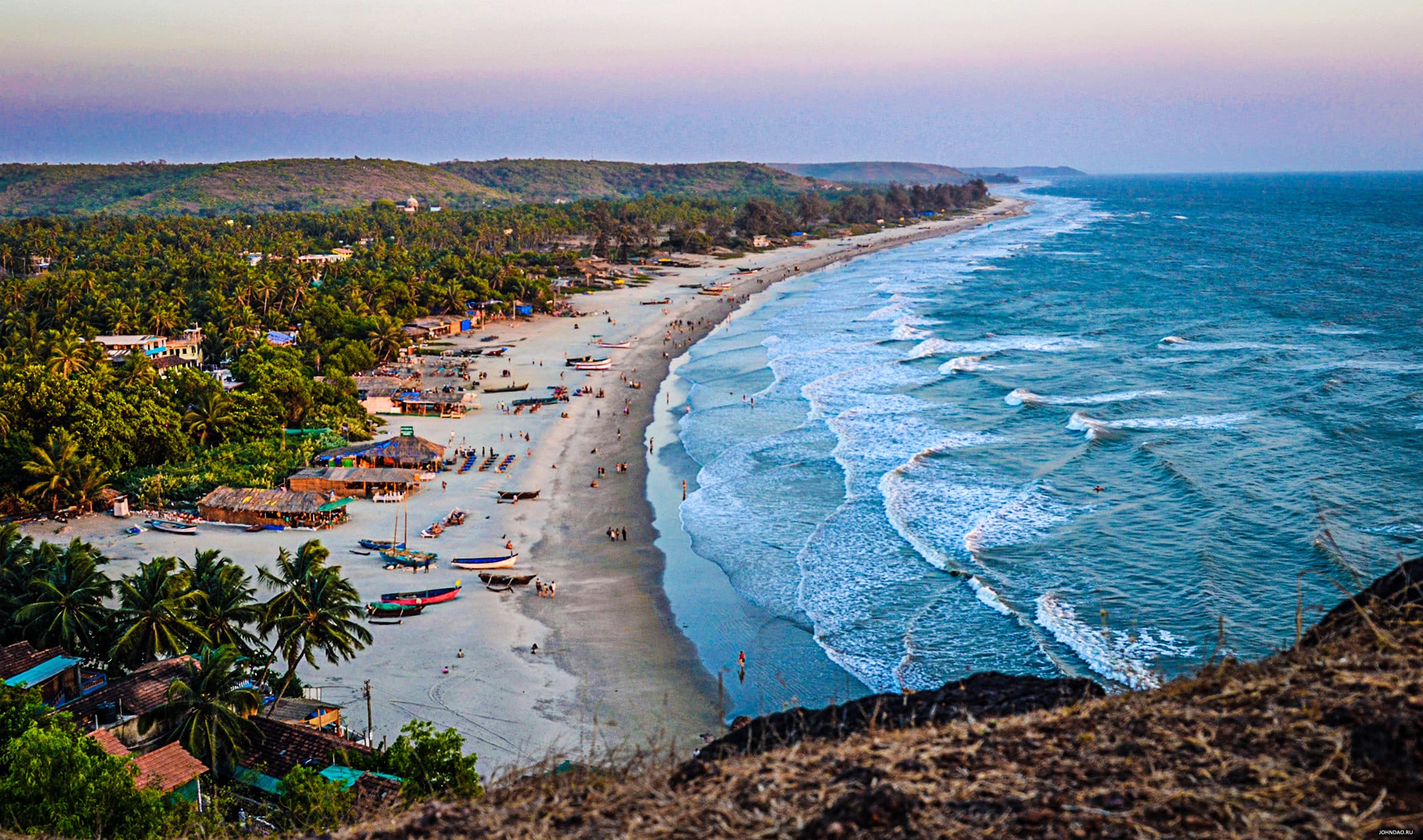
Arambol Beach Guide: Goa's Slower, Bohemian North
Arambol sits at the far edge of Goa's beach belt and has kept a slower, more independent character — a cliff-path lake, an evening drum circle, and a genuinely different pace than the beaches closer to the airport.
 Beach Guides
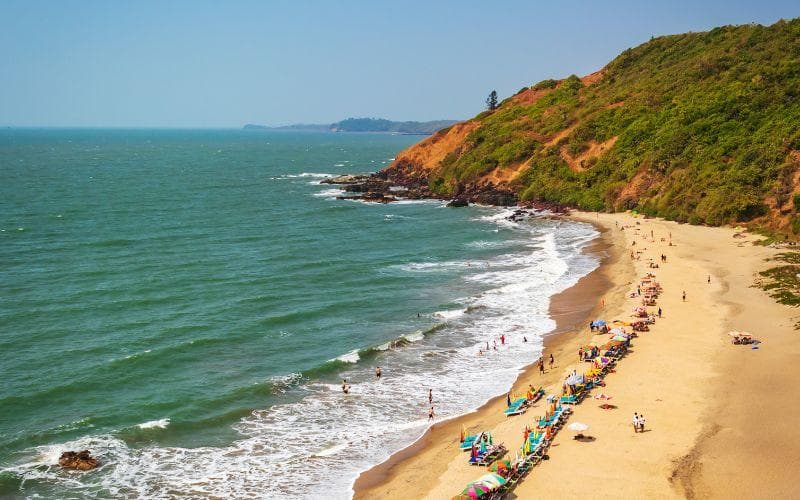
Vagator Beach Guide: Cliffs, Chapora Fort & Where to Stay
Vagator trades flat sand for red laterite cliffs, a working sunset ritual at Chapora Fort, and a small, boutique-leaning stay scene next door to Anjuna.
Ready to Book Your Goa Escape?
Tell us your dates and we'll find the perfect villa, resort or cottage for you — usually within the hour.